ILÉM PAPER
Second Hand Nostalgia – A conversation with Uyghur Artist Camilla Dilshat
Non-belonging – A conversation with Conceptual Artist Intizor

The Girl Who Ran in Heels – On Distance, Identity, and Arriving Somewhere No One Expected You.
Visual complexities arise, in this Hotan rug
Second Hand Nostalgia – A conversation with Uyghur Artist Camilla Dilshat
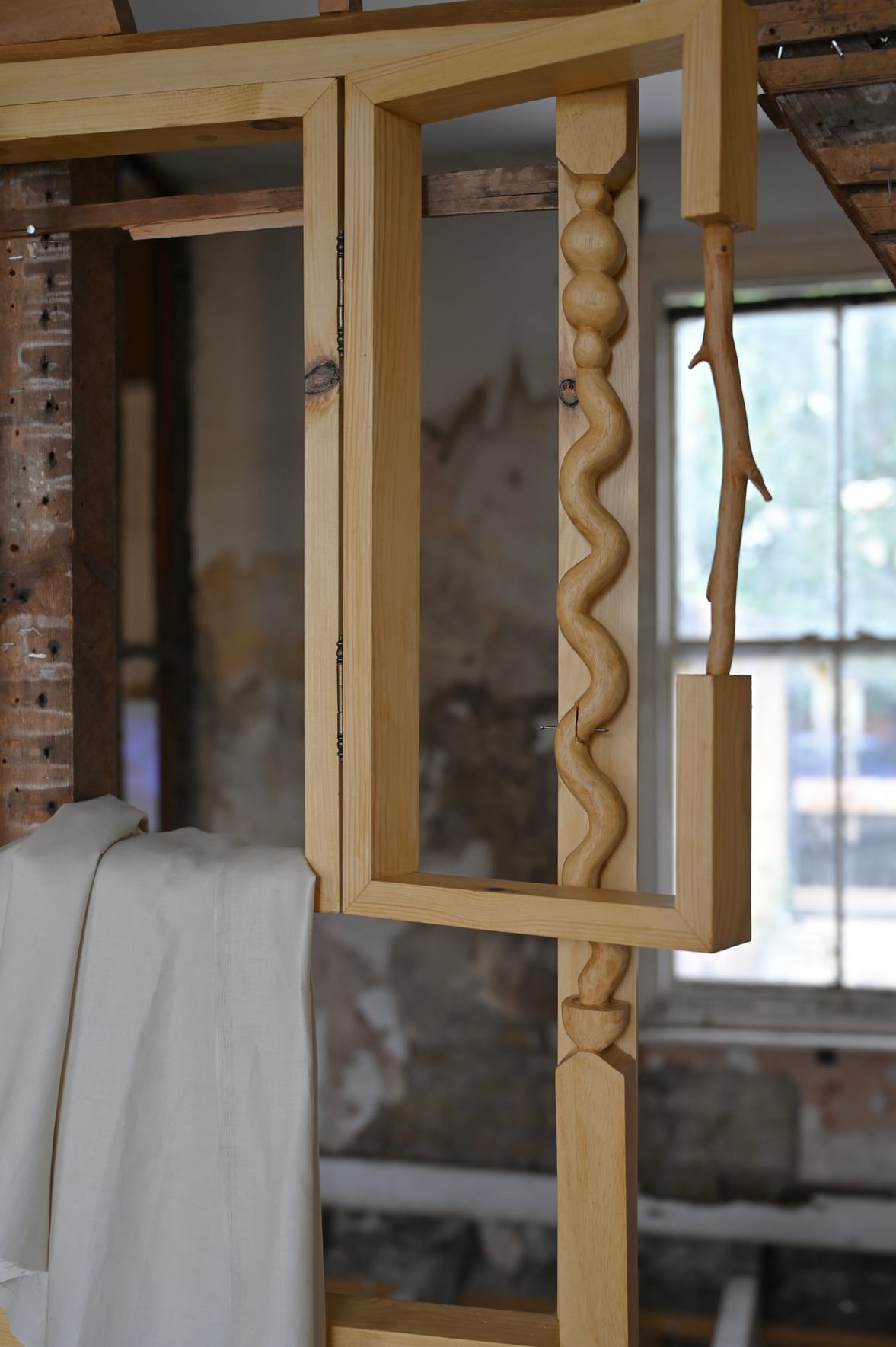
Camilla is a young Uyghur artist based in London making sculptural work about diaspora, memory, and the particular grief of inheriting a home you've never fully lived in. Comfort spoons. A sinking chair. A paper pulp tonur built on hands and knees, fragile by design.
We share a heritage. That changed how I listened to this story. What she's doing is finding new ways to feel “Uyghur” when the old ways were never fully available.
This Interview is personal to me on so many levels.
-Imran
C.D. - I didn’t grow up in the Uyghur homeland, I've been there a couple of times. I think we are all obsessing over this second hand nostalgia, we are inhabiting these moments and creating nostalgia even though they may not be our lived experience. There is a tension between having a very physical disconnection with a place, where you have memories that might not even be your own. The idea or thread is to find connection, this is what I am trying to find through each of my pieces.
I.A. - Would you say the idea of home changed over time?
C.D. - For me home is something that is constantly changing. I have this idea of home as an idea of a place, home can be between places as well. I am a Londoner but my heritage is not from here. What I tend to grasp within the idea of home is something tangible. Like food, the warmth and weight of food in the stomach and this idea of comfort. For example, I have explored my mothers habit of eating from wooden spoons as a source of this homely comfort, resulting in a series titled “comfort spoons”. These spoons also follow a large craft history of hand carved wooden spoons within Uyghur culture.
I.A.- When you approach a project what comes first?
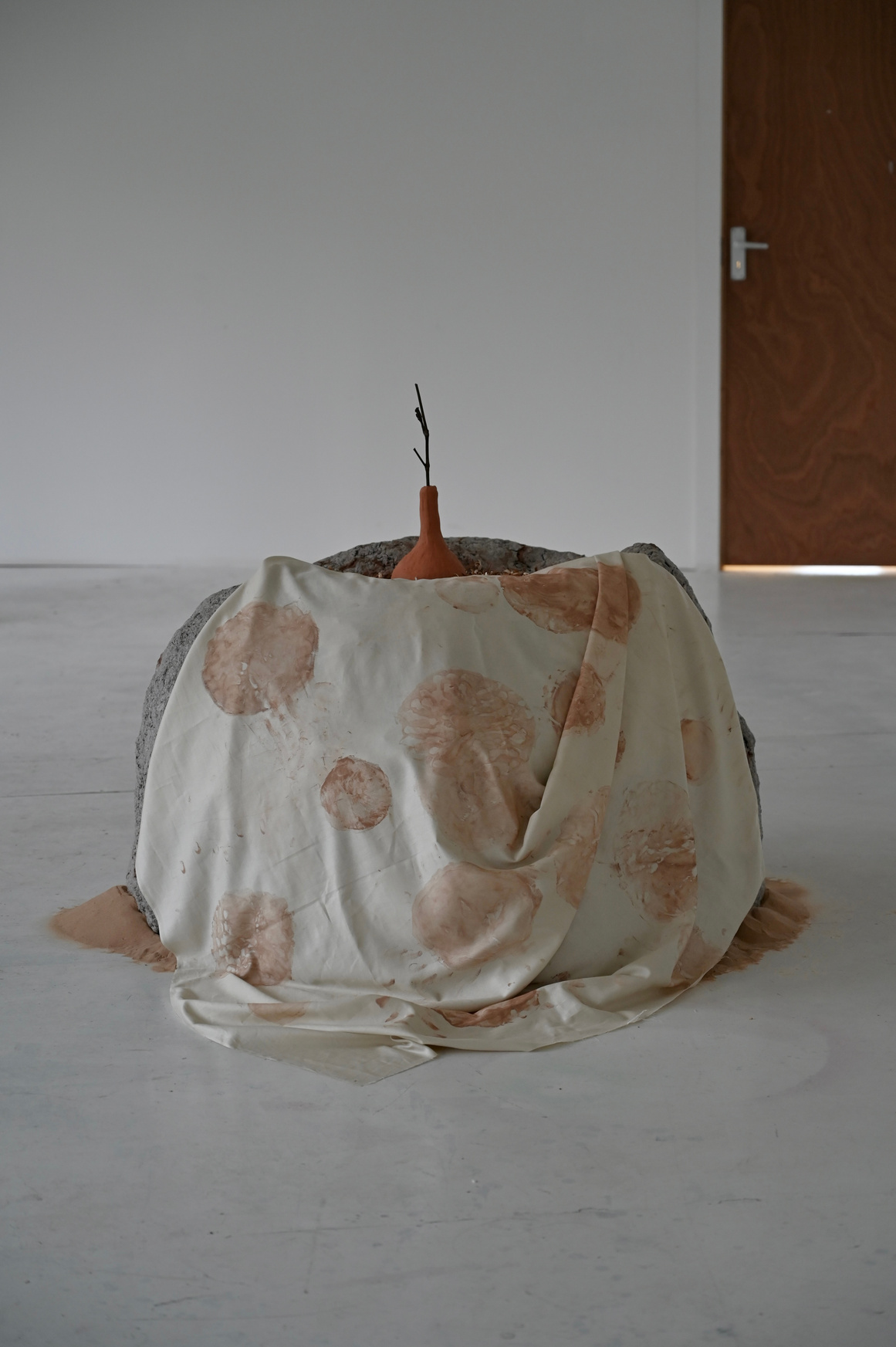
C.D. - It will always be a personal anecdote. Typically I find that it is usually a feeling. Like… When do I feel uncomfortable with language and isolation? From this I want to create a material narrative that reflects this bodily feeling and that inaccessibility. Often while starting the creating process it can be really interesting how bodily feeling actually translates into my art, because through the process I will find out what the material is suggesting to me. Sculpting can be a laborious process, for example I made a tonur from hand making batches of paper pulp. Making paper pulp has similarities to making food. I was kneeling on the ground mixing like how my mum kneads dough. There is also the realization that the material is fragile and combustible, conflicting with the tonur’s use as an oven. In a way, I am letting the materials influence the narrative of the piece.
I.A. - I really like Re-remembering a Homeland. Could you further explain that piece.
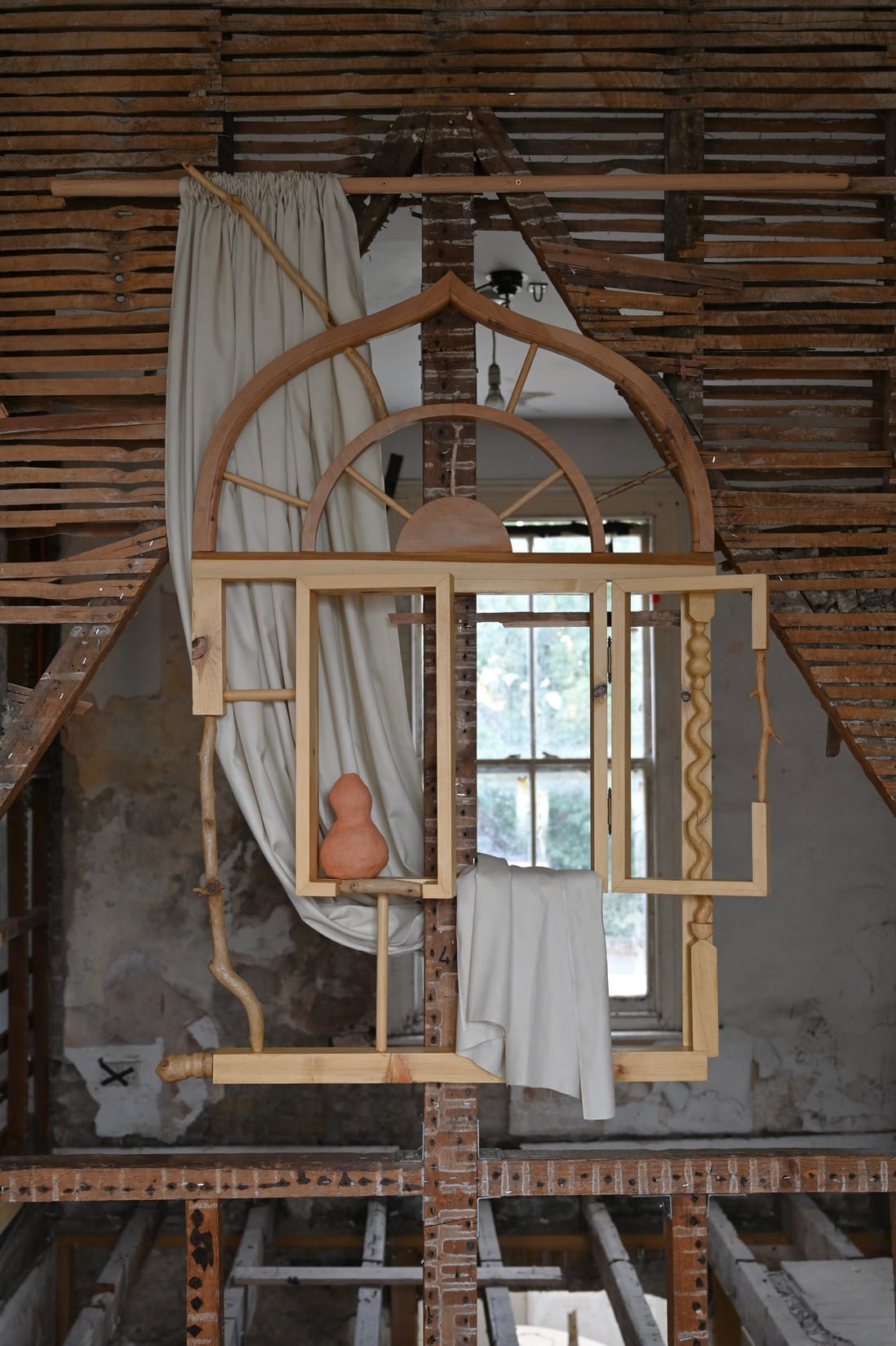
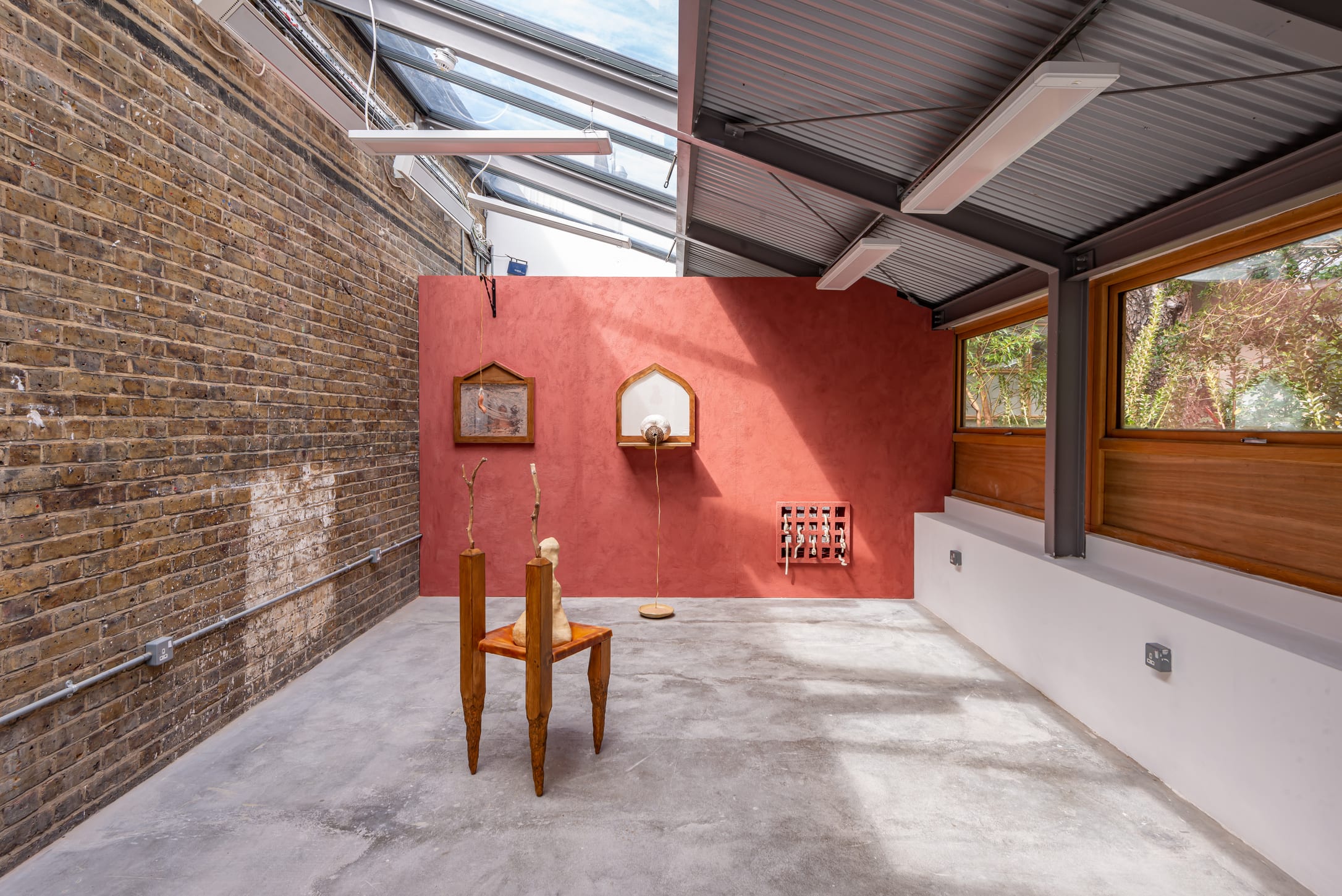
C.D. - This is when I started exploring the idea of a home or a domestic space. During this time last year I was increasingly engaged with the Uyghur diaspora and was following different instagram accounts that shared imagery of homemade terracotta houses. I wanted to create my own interpretation of the exterior of an Uyghur home. I was engaging with this tension between connection and disconnection and how that relates to outside/inside, for example a window acting as a barrier - trying to see inside and not being able to access a room. The windows in the installation became a site to explore disconnection with language and heritage. To counter this the house vent acted as a metaphor for connection “leaking” through. Like how my mom’s memories of “home” leak into mine. Sometimes I ask her, “If you were to visit now would you still recognize everything?” I know that even though this place is physically home for my mum, there is this feeling that things would’ve changed now - places would look different. Sometimes I feel as though we are romanticizing this ideal image that doesn’t exist anymore.
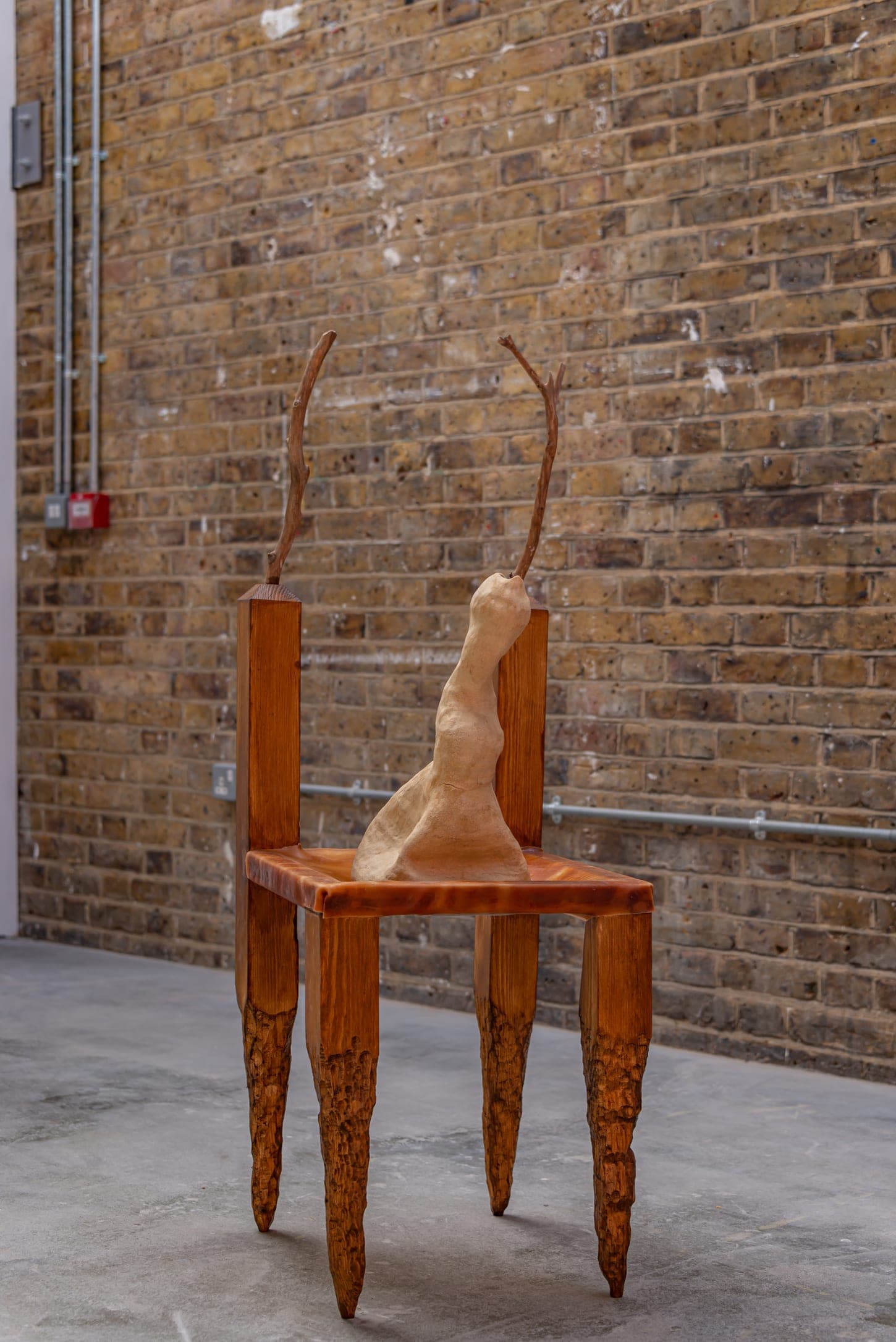
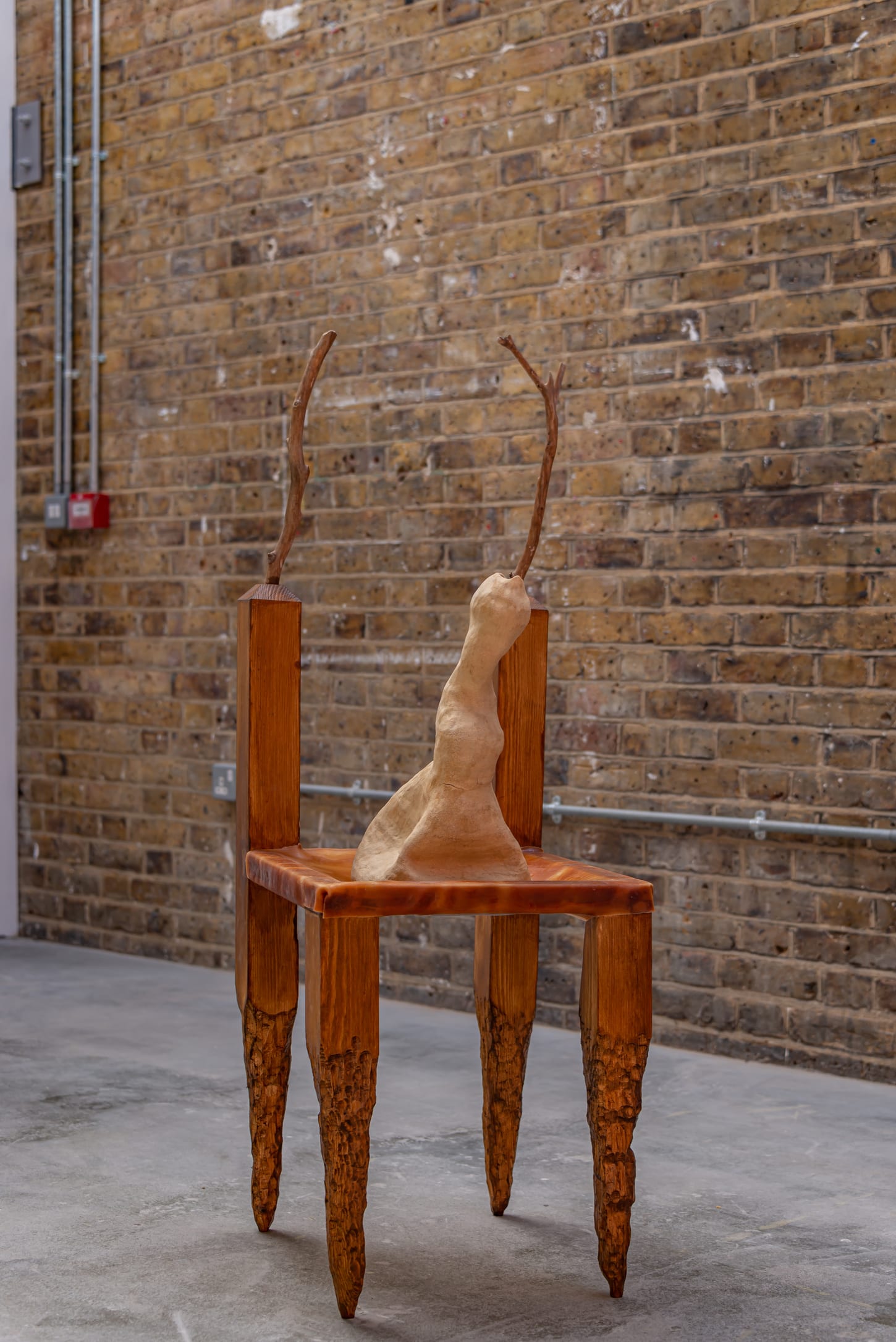
I.A. - What about the chair in the photo?
C.D. - I had this vision of a sinking chair. Which, you know the chair is a symbol of contemplation, of rest, but also exhaustion. It is engaging directly with these themes explored in the representation of the house exterior. I wanted to create this sinking effect with the heavy ceramic gourd that looks like a stomach to me, weighing down the stretched skin-like latex on the seat. The chair's legs have also been gnawed away creating instability. The piece is acting in dialogue to the rest of the exhibit, sort of narrating my personal feelings when making the work.
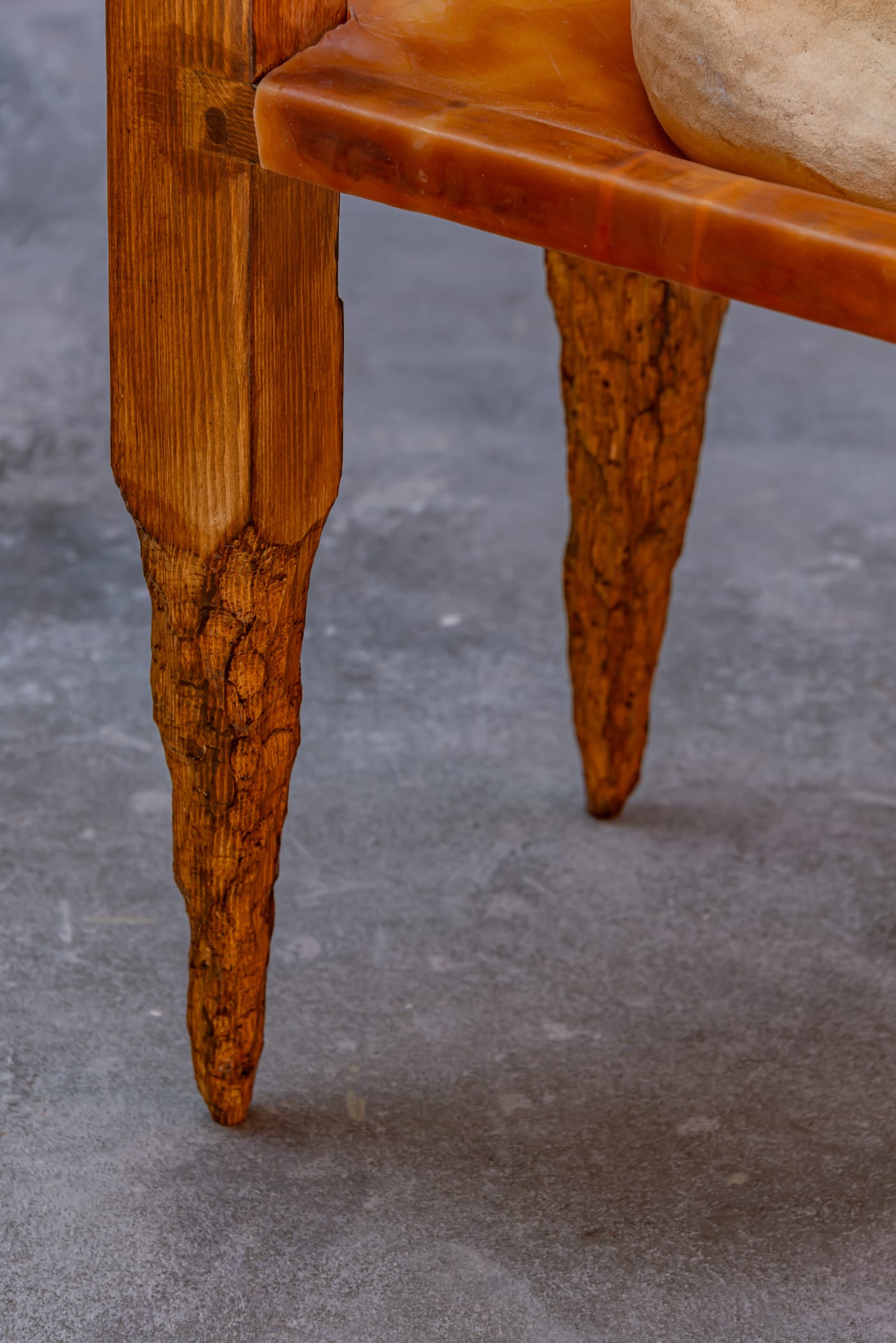
I.A. - I've been curious about the general mood that you would want the exhibit to be known as. A lot of people might not get the narrative, they might identify with the key bodily feeling. Maybe they identify with comfort, discomfort, community, etc.
T.K. - How would you say that those aforementioned embodied experiences effect the rest of your work?
C.D. - Because I work in the embodied experience. There is this idea of being intimate with the bodily connection expressed in the work but also bodily labour in creating the work. In the tactile making of these pieces, there forms a mental and physical connection to the work. This is what I want from the process, and it is important for me to have that connection. Especially in the context of bodily memory, and for example with connection to food. This is the labour, whether it’s with wood carving, clay or paper pulp, which is an innate part of my process.
I.A. - Would you like to keep exploring the idea of home in your future career?
C.D. - It is what I see for the foreseeable future. I would say that right now I think these themes I explore could be applicable to any diaspora even though it originates specifically from my lived context as an Uyghur person. All diasporas are experiencing culture shifts and discussion around identity and connection and disconnection. For me, there is this idea of not being Uyghur or British enough, but I think there is so much we should really celebrate when it comes to diasporic identity. We have to redefine our ways of belonging and create our own spaces of longing. That is what I am interested in right now and for the foreseeable future.
I.A. - What has been your parents' reaction to your work, and what did they take away?
C.D. - My parents didn’t really understand what I did at first. They didn’t understand why I made work about their stories and experiences but slowly when it came time for my first solo show in November I think they understood it. They understand that I can't connect to my heritage in the way that they did and my art practice is about making new ways for me to feel Uyghur.
T.K. - How did you process this grief, and is it reflected in your work? I at least personally, know that being a part of the Indian diaspora…sometimes it is tricky and nuanced to do so.
C.D. - I’m processing grief through absence. Like in comfort spoons, with their detached tongues, or in shadows & gestures with clay marks showing presence but at the same time the absence of the bodies that made the marks. Maybe I am navigating through grief through processing longing. I try not to dwell too much on this in my work, as it can be quite paralyzing. It's okay to have these moments of absence and emptiness but I also want to know how to add activity and presence.