ILÉM PAPER
Second Hand Nostalgia – A conversation with Uyghur Artist Camilla Dilshat
Non-belonging – A conversation with Conceptual Artist Intizor

The Girl Who Ran in Heels – On Distance, Identity, and Arriving Somewhere No One Expected You.
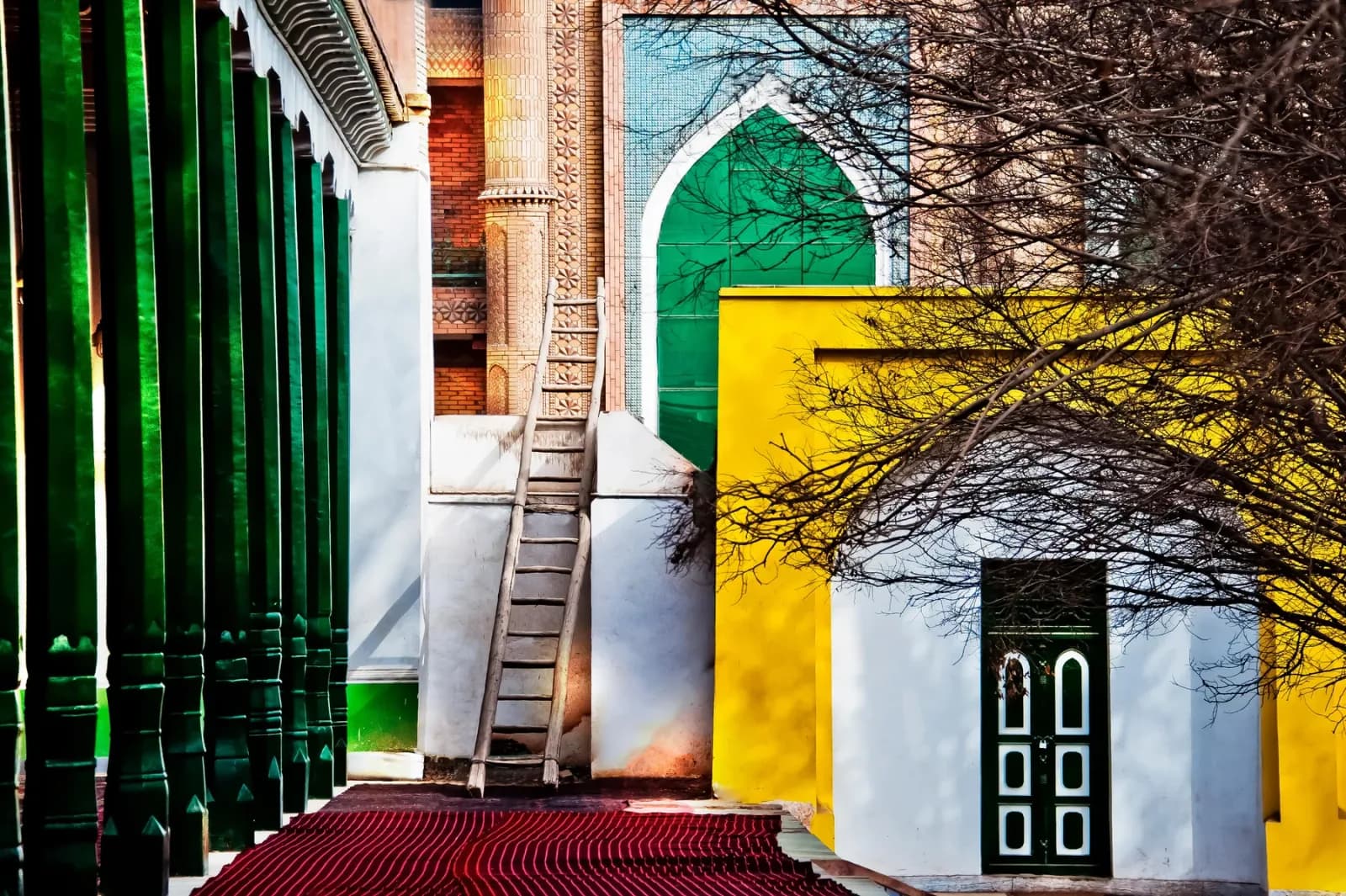
Visual complexities arise, in this Hotan rug
Visual complexities arise, in this Hotan rug
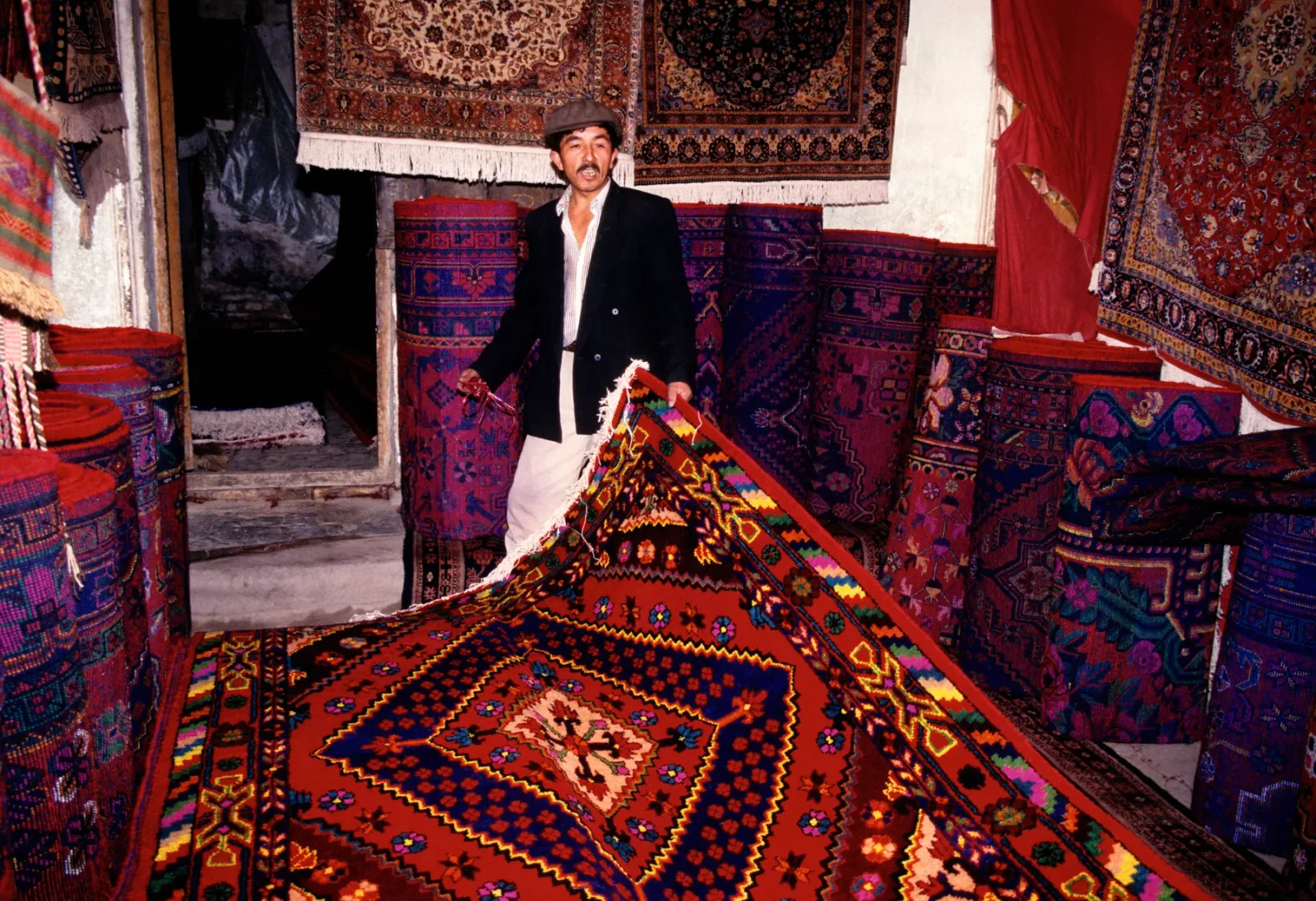
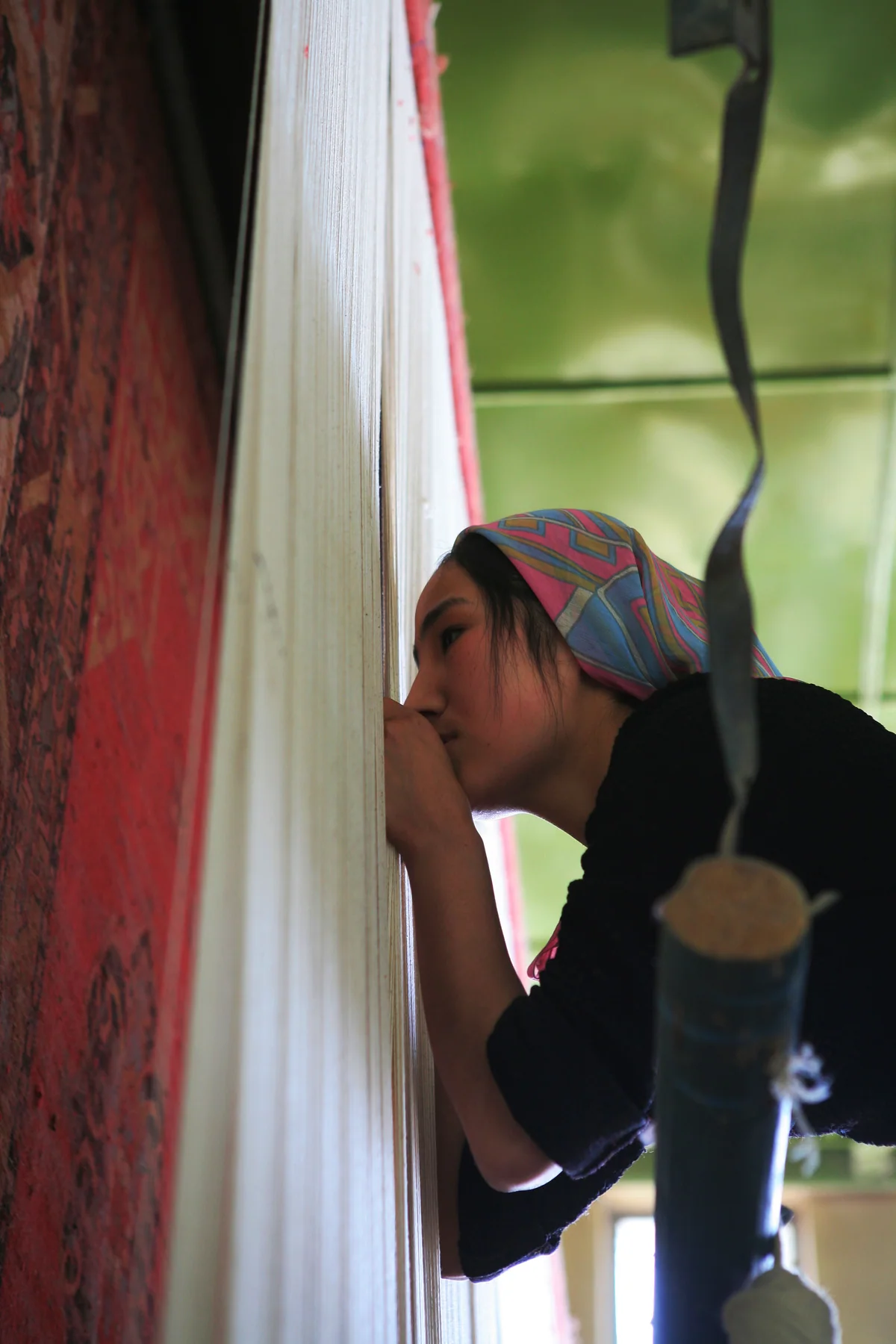
Visual complexities arise in this Hotan rug. The weavers' stories come to life through geometric patterns and stylized botanical motifs. A regional typology of the Gilém گىلەم, the Hotan rug developed a voice in its own right. Not only by influencing early Silk Road texts by introducing an extensive Uyghur weaving culture to the rest of the world, but also by functioning as an early cross-cultural expression of religion and an ever-complex Central Asian identity.
Current knowledge shows a tradition of Hotan rugs being woven since and most definitely before the fourth or fifth century in Hotan itself. The structuring of a typical Hotan rug is about fourteen threads of warp and sixteen threads of weft to the inch. The pattern consists of narrow stripes of blue, green, brownish yellow, and red, containing very small geometric designs.” Woven to be flat to the ground, kilims are traditionally part of a larger language of prayer rugs and follow a similar visual language. The cloth warp, brown wool, or goat's hair has each of the two threads encircled by a knot that is equally prominent at the back. A thread of weft crosses twice between every two rows of knots. Creating spiritually clean spaces during daily prayer, Islamic prayer rugs are typically filled with distinct iconography. Such as flowers, an arch, a lamp, a water pitcher, etc. These rugs, often passed down through generations, are a sign of resilience and an inner faith. In telling this story, I am returned to the Hotan rug, which is a symbol of community, of faith in guidance at times beyond, a guidance in hardship and peace.
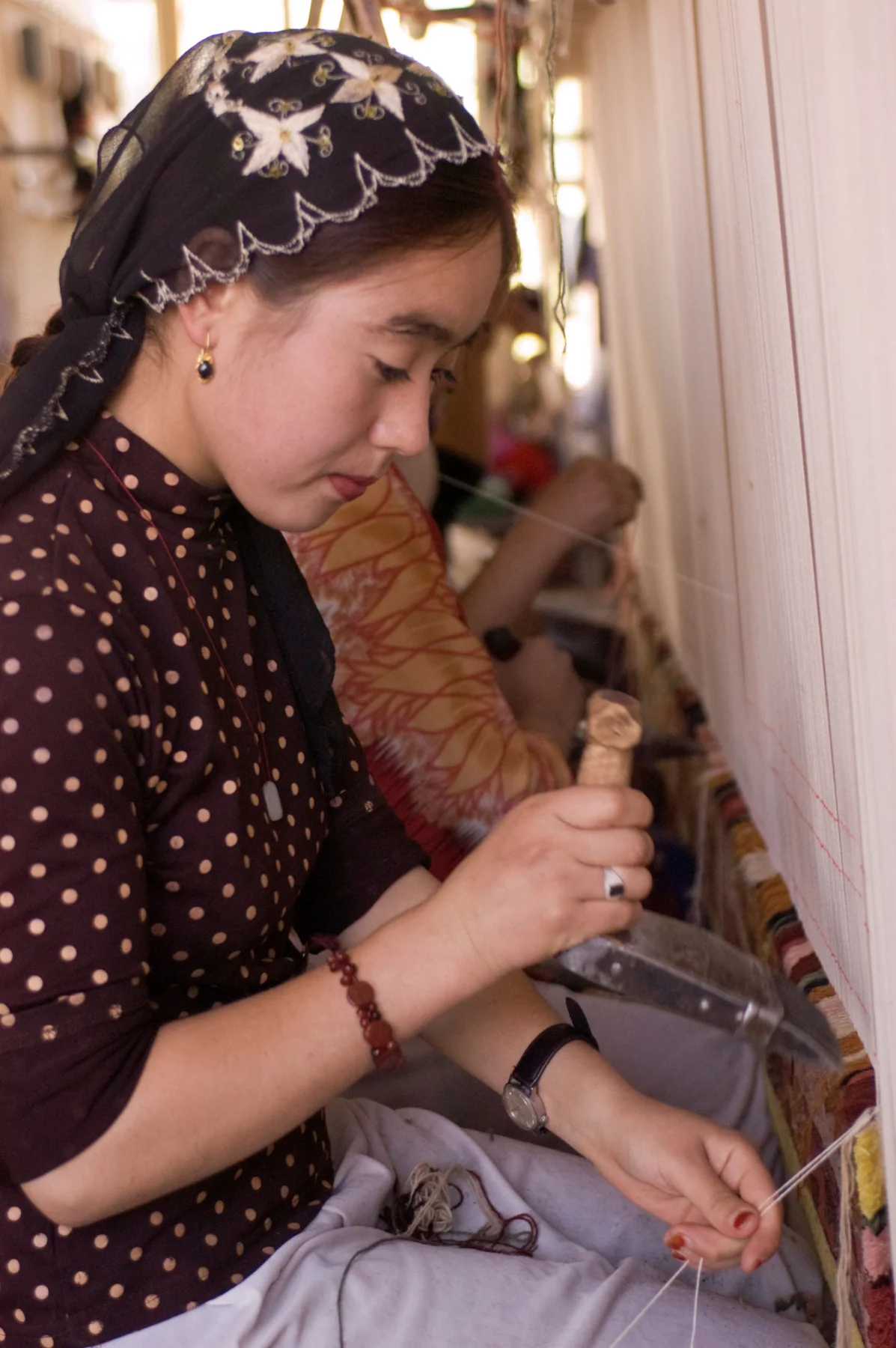
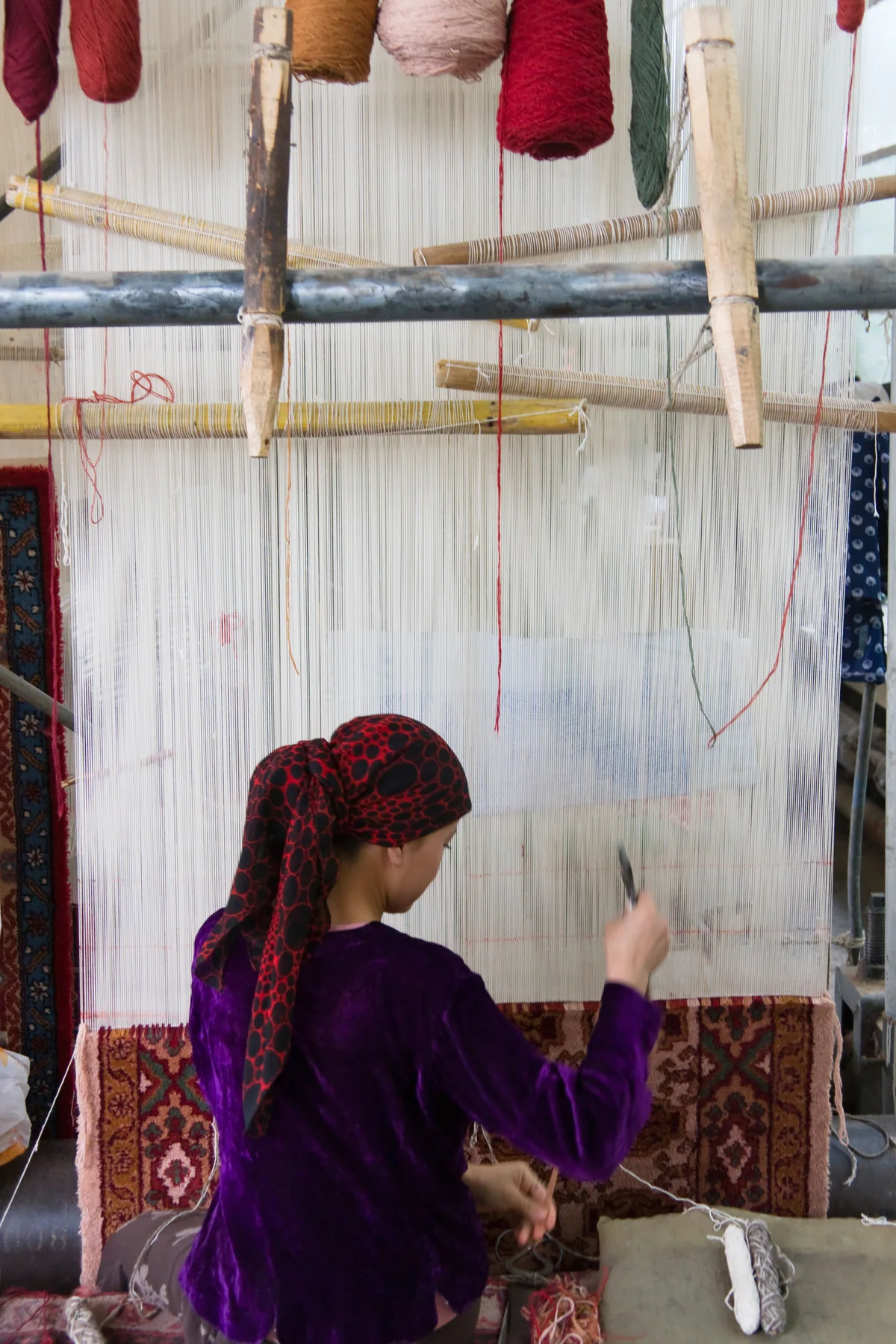
The visual layering of the Hotan rug speaks to the nuanced history of cultural movement across Central Asia. Within these rugs, one can trace the meeting of Persian, Turkic, and a broader religious Islamic influence. Geometry becomes a way to survive displacement and hold physical and metaphorical space for spiritual life. In this sense, the rug operates as both object and archive. The mere existence of the current Hotan rug is one of preserving fragments of Uyghur cultural expression. The Hotan rug is a way of survival through tactile and domestic ritual. Every knot and dyed thread carries evidence of labor shaped by a devotion to craft. The rug remains grounded everyday life. The rug has meaning that extends beyond utility. It reflects an understanding of space as sacred. The Hotan rug exists as a woven articulation of intergenerational identity. An Identity that resists erasure, an identity that belongs to every Uyghur person across generations and histories.