ILÉM PAPER
What Remains — A conversation with Industrial Designer Nao Iwamatsu
The Shape of Tea – In Conversation with Takashi Ichikawa

Gender Dynamics and Post Consumer Behavior: Matcha
Where Flowers Become Form – with Floral Artist Genki Tanaka

Listening to the Primordial Wind – with Musical Artist Ryuuta Takaki
What Remains — A conversation with Industrial Designer Nao Iwamatsu
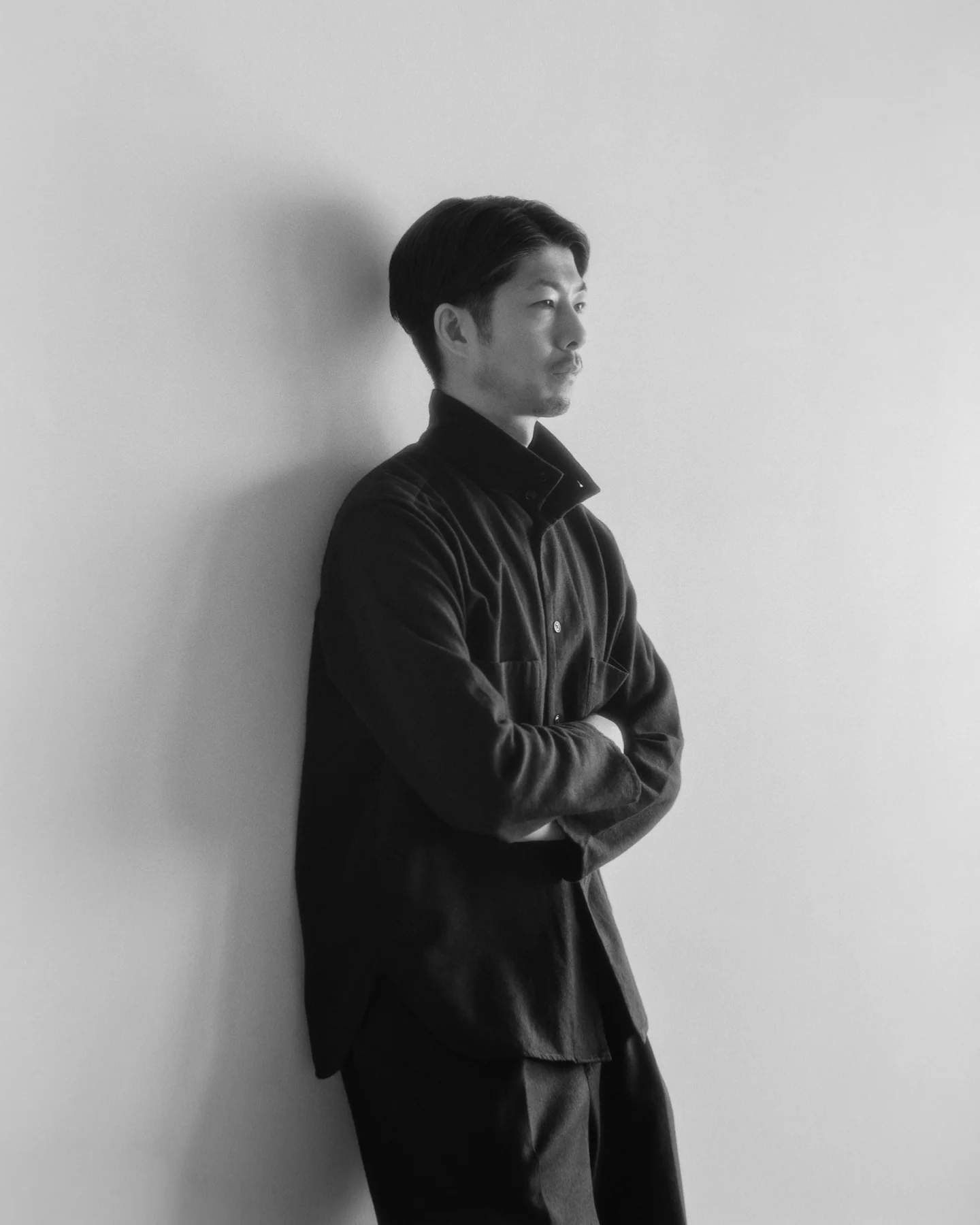
For the first chapter of ILÉM PAPER, I had the pleasure of speaking with Nao Iwamatsu, an industrial designer based in Tokyo whose work I’ve admired for a long time.
Minimalism is something I’ve wanted to explore for a while—not as a trend or an aesthetic shortcut, but as it exists today: as a way of living, as a design language. Finding the right person to have that conversation with matters, and I genuinely believe Nao is that person.
This interview is the most honest, considered exploration of that question I could have hoped for.
Through our conversation, you’ll get a real sense of Nao’s design identity, the way he sees the world, and how culture quietly shapes his work. It’s the kind of exchange that stays with you.
I hope it brings you as much joy as it brought me.
— Imran
I.A - Hi Nao, before we begin, how would you describe yourself in three words?
N.I. - Quiet, observant, pragmatic.
I.A - Do you feel your personality and your work overlap in those three words, or do they exist separately?
N.I. - My work and I are not completely separate. The themes I engage with and the companies I collaborate with shape how I express things, but the work ultimately appears where those elements intersect with who I am at that moment.
There is still a difference between me and the work, mainly in intensity. Personally, I don’t speak loudly about my beliefs, but in my work, I consciously control that intensity. I see myself not as an artist, but as a designer. Rather than asserting my own ideas, I translate the philosophy of a client’s founder or brand into form. In that process, my own values naturally emerge.
I.A - The concept of “Narrative Minimalism” appears central to your practice. What does it mean to you?
N.I. - I’ve long been drawn to minimal design, removing unnecessary forms to reach something more universal—beyond trends or time.
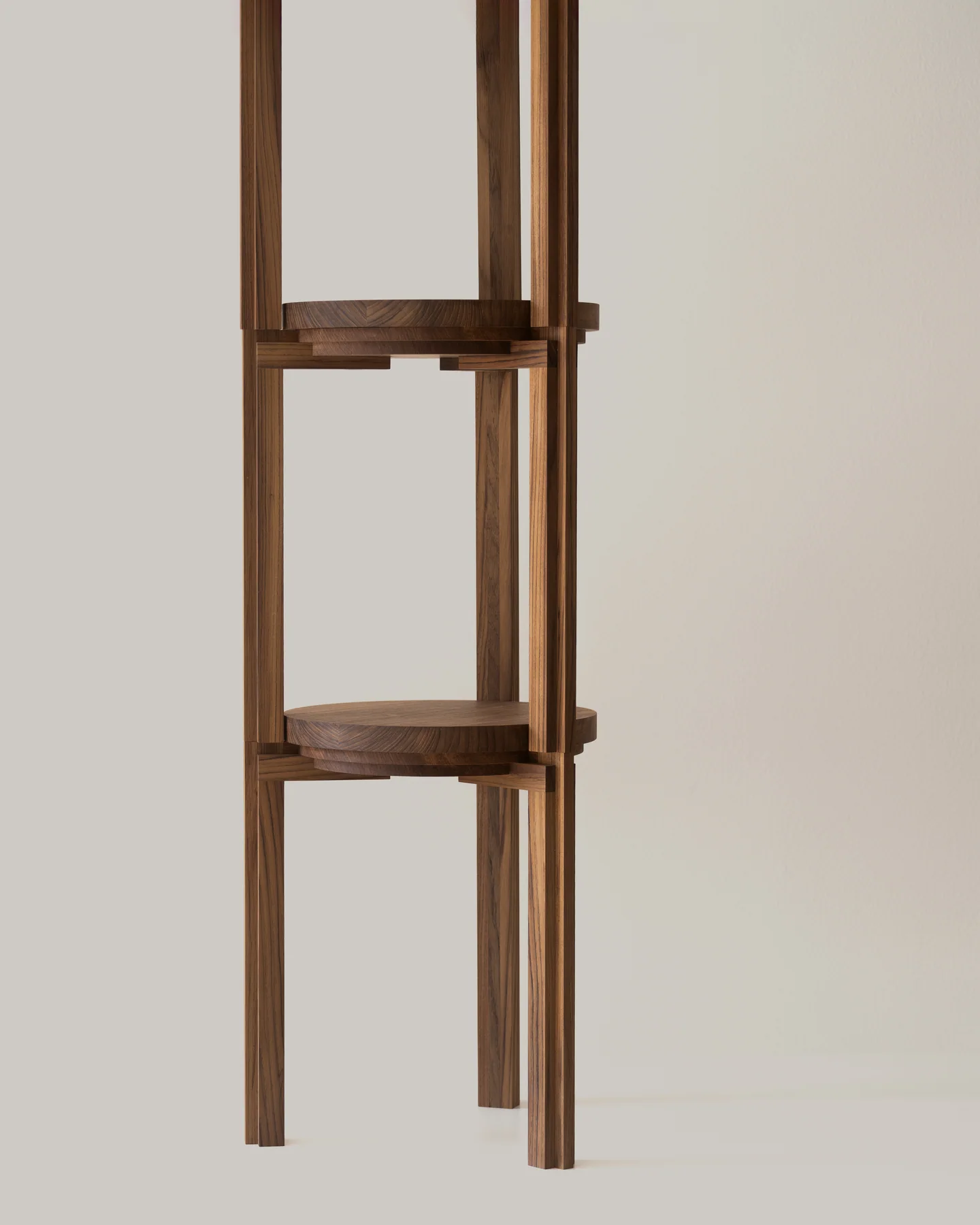
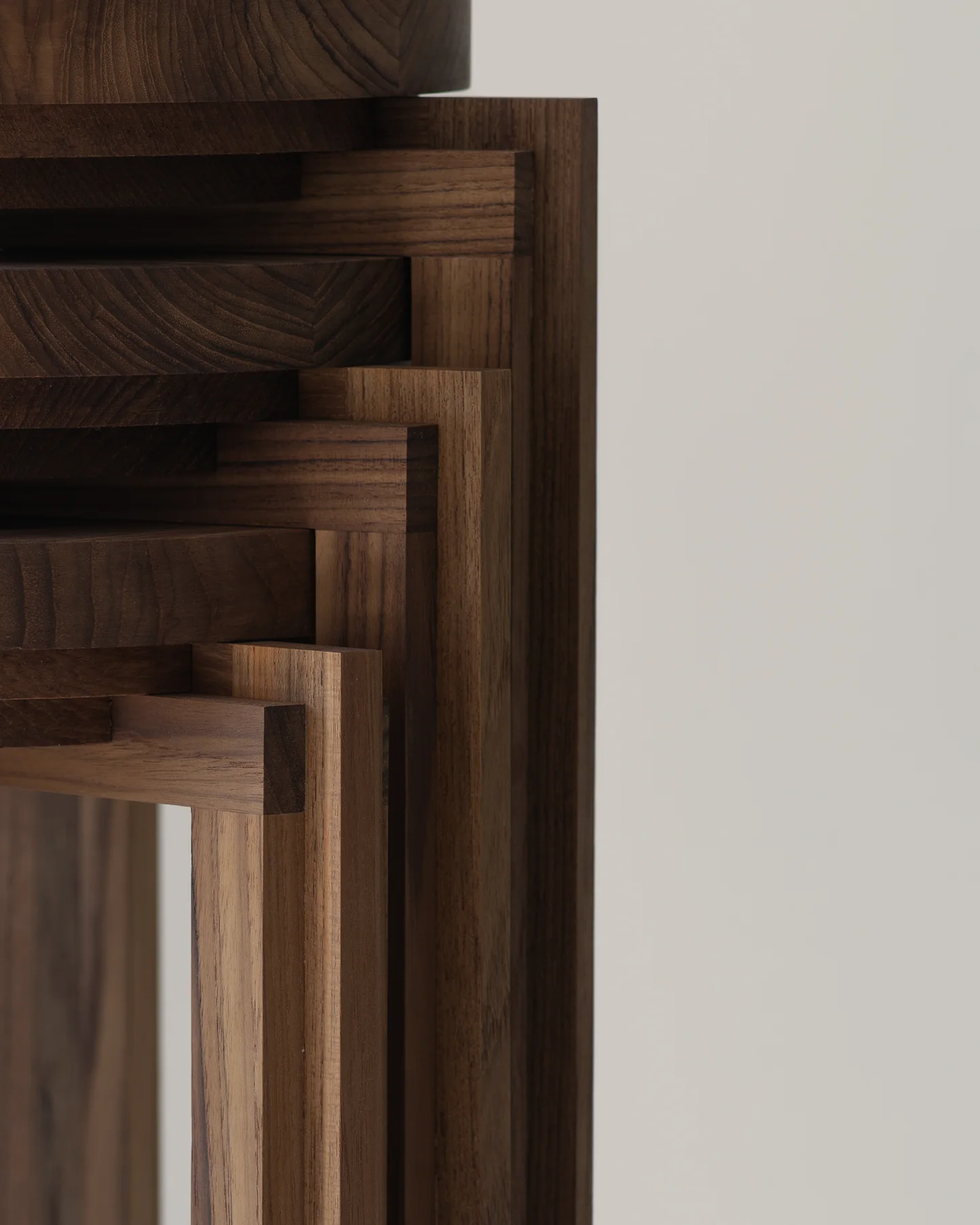
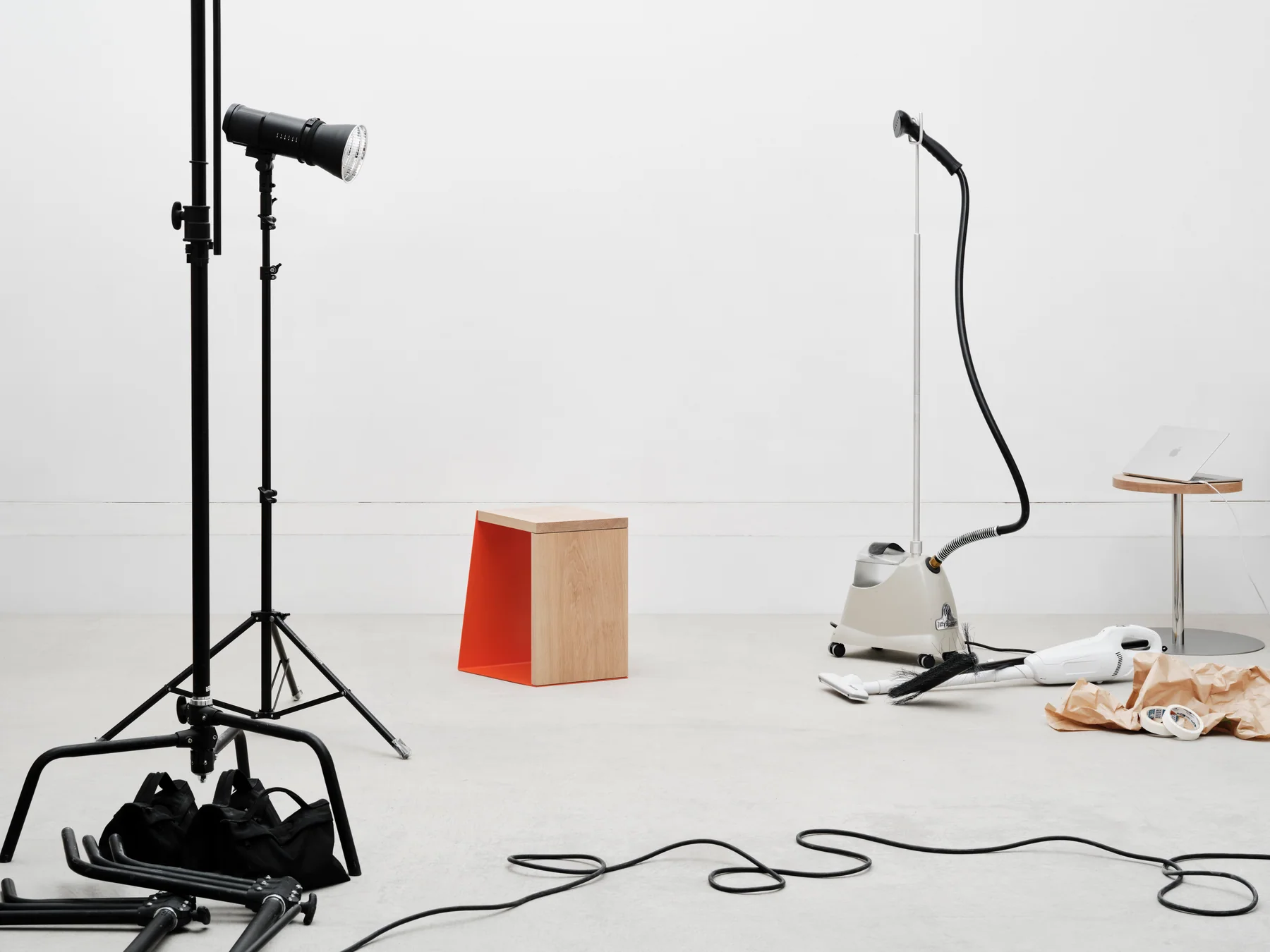
Over time, people began describing my work as “poetic.” I realized I’m not just stripping things down; I’m revealing the story already within the object. I then organize that story into minimal forms that leave space for interpretation. In the By Shadows collection, for example, I removed the base of a table or stool and reimagined it as a “shadow” without thickness, allowing its presence to almost disappear.
I.A - In your Cornice Stool, you turn an everyday object into something architectural. What created that shift?
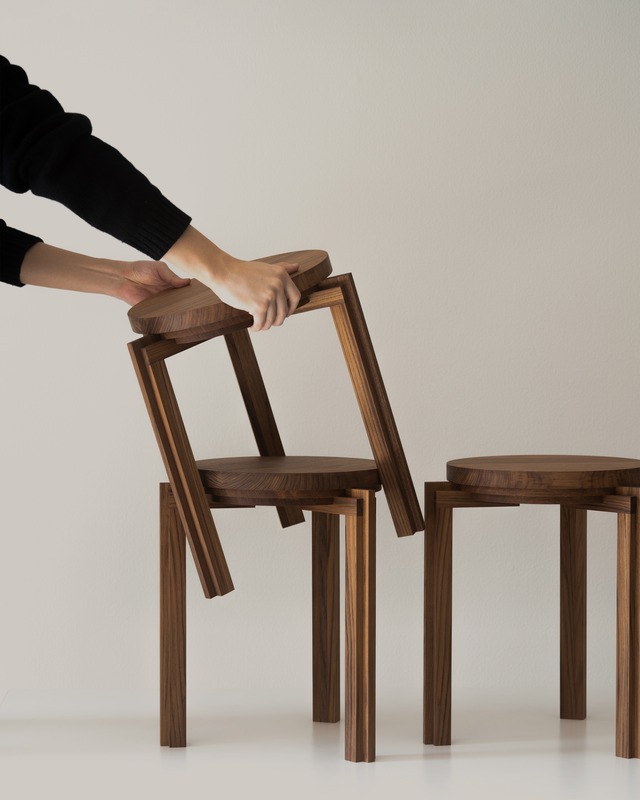
N.I. - Where does the boundary between object and architecture lie? A board on a wall becomes a shelf, but placed within a structure, it can function the same way. Stacked shelves begin to form architectural gestures. Products contain architectural elements, and architecture contains product-like ones. So I asked: what if a stool is not a chair with legs, but a structure of spiraling steps? From that idea, the design naturally became more architectural.
I.A - Is there a piece that challenged you most?
N.I. - I want every project to be challenging. If it isn’t, I create a new challenge—through materials or fabrication methods I’ve never used before. The same applies to clients. When something feels uncertain but possible, I feel fortunate. By the end, both sides gain something new. That exchange is the ideal relationship in design.
I.A - How do you balance cultural reference with contemporary intent?
N.I. - I focus on how objects behave—how they exist within space, how they influence it, or sometimes deliberately don’t. Objects exist within larger systems: space, architecture, nature, the Earth. Some should blend quietly; others should transform their environment. Architecture and natural phenomena help me think on that scale. I ask what kind of object is meaningful now, carrying cultural elements while remaining present.
I.A - How do Japanese traditions shape your work today?
N.I. - I was born in Nara, studied in Kyoto, and now work in Tokyo. Japanese influence is not visible as a style, but embedded in sensibility and decision-making. Creation is a series of choices—materials, form, color, even names. At the foundation of those choices is a Japanese aesthetic. I see that positively and hope to continue refining it. I’m also considering returning to a studio in Kyoto.
I.A - Does practicality limit your expression?
N.I. - I feel the opposite. I still see myself as a designer, which keeps me committed to practicality.
Strong constraints often lead to new forms that wouldn’t otherwise exist. But practicality also extends beyond function. Even non-functional objects shape space and behavior. An empty shelf invites use—it fills an emotional gap. So practicality is not only a function, but also how something exists within space and feeling. Going forward, I want to move beyond the opposition of practicality and expression, toward value and beauty.
I.A - Do you think minimalism means something different today?
N.I. - Yes. Minimalism that removes decoration has largely become infrastructure—seen in Apple, MUJI, and everyday design. So the question is what minimalism is now. I think it needs narrative, depth, and emotional space. Minimalism is not a style, but a way of finding meaning. What remains after subtraction is the real question.
I.A - What kind of conversations do you hope your work will enter next?
N.I. - I want to ask what we actually need. We can now produce almost anything, but it’s unclear whether meaning has increased. I aim to create objects with a clear reason for existing—not just new forms, but things that shape space, emotion, and long-term value. Ultimately, I ask: what remains after everything unnecessary is removed? Through that, I hope a quiet dialogue emerges between people and objects.