ILÉM PAPER
What Remains — A conversation with Industrial Designer Nao Iwamatsu
The Shape of Tea – In Conversation with Takashi Ichikawa
Gender Dynamics and Post Consumer Behavior: Matcha
Where Flowers Become Form – with Floral Artist Genki Tanaka

Listening to the Primordial Wind – with Musical Artist Ryuuta Takaki
The Shape of Tea – In Conversation with Takashi Ichikawa
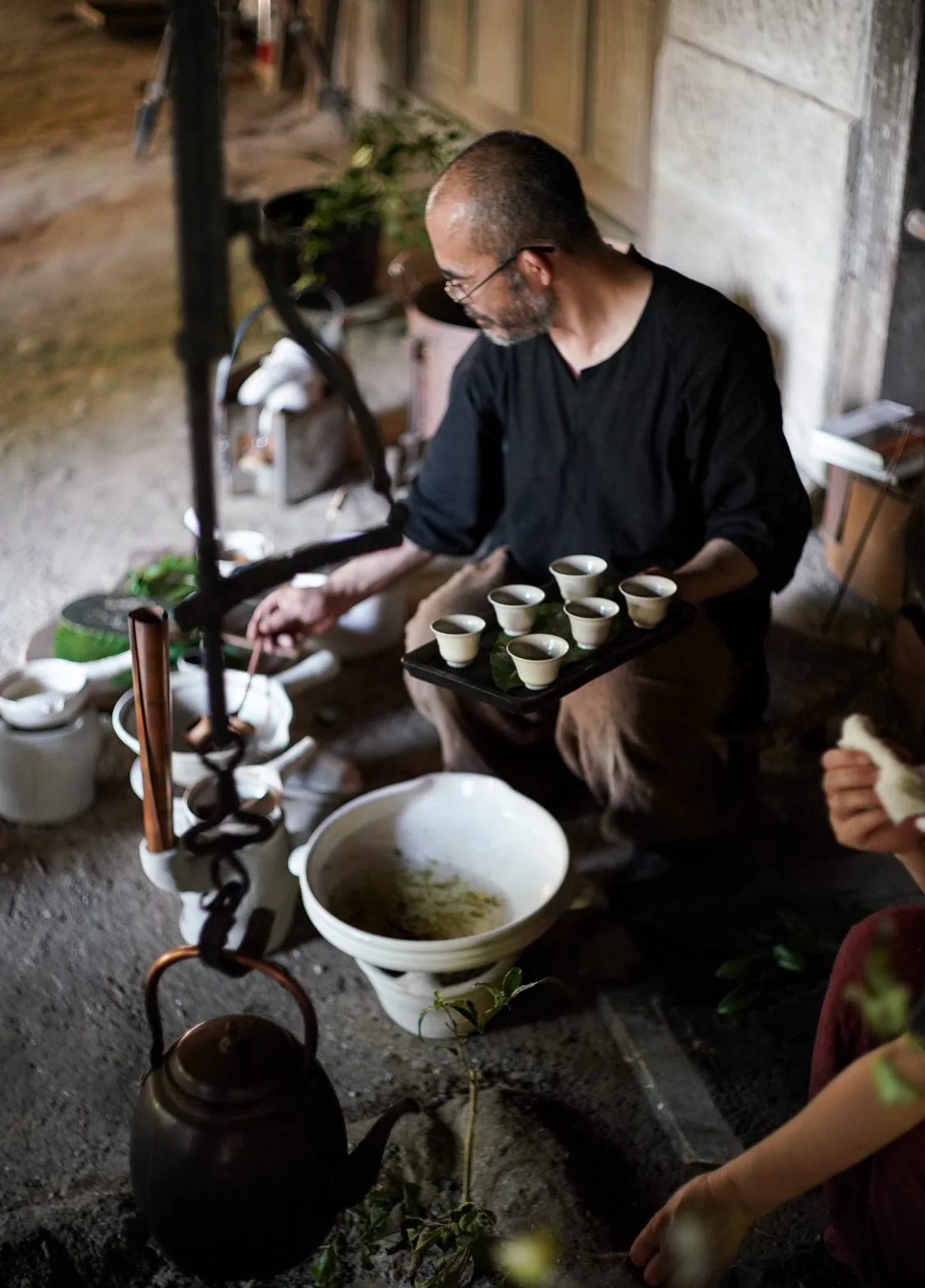
It was such a pleasure to speak with Takashi Ichikawa — a ceramicist based in Shiga, Japan, whose work lives at the intersection of craft, tea, and a deep curiosity about plants.
Tea is something I've wanted to explore for a while. Finding the right person to have that conversation with matters, and Takashi is exactly that person. His practice extends into forests, ethnic minority traditions, ancient trees, and the tools we use to gather around something warm together.
Through our conversation, you'll get a real sense of how Takashi sees his work — as invitations. I believe this will expand the way you look at ordinary things.
– Imran
A: Hi Takashi, before we speak about your work, how would you like to introduce yourself?
TI: Although I studied sculpture at university, I eventually chose to
pursue a path in ceramics. I began creating tableware designed to complement specific dishes, as well as heat-resistant teapots and a variety of functional tools.
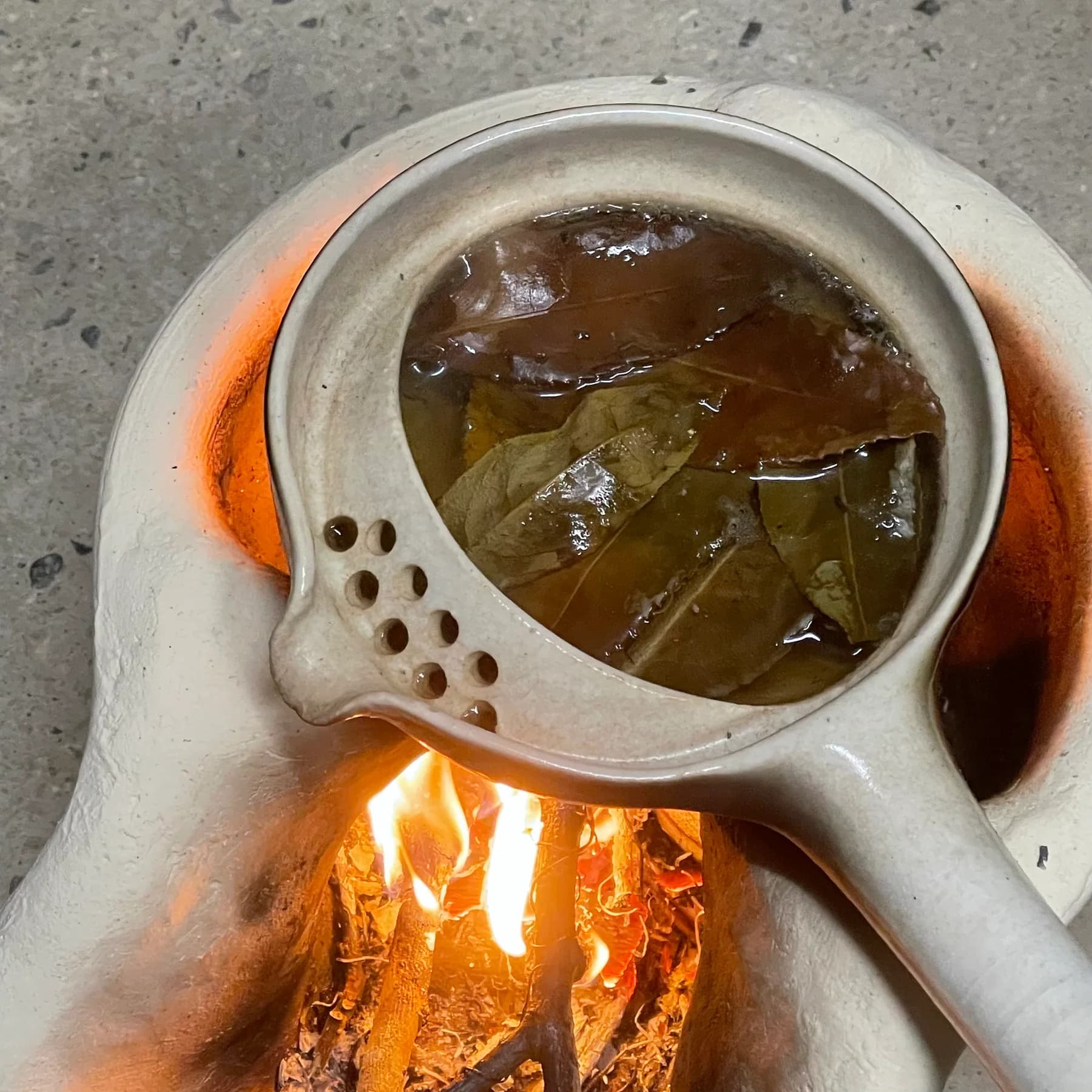
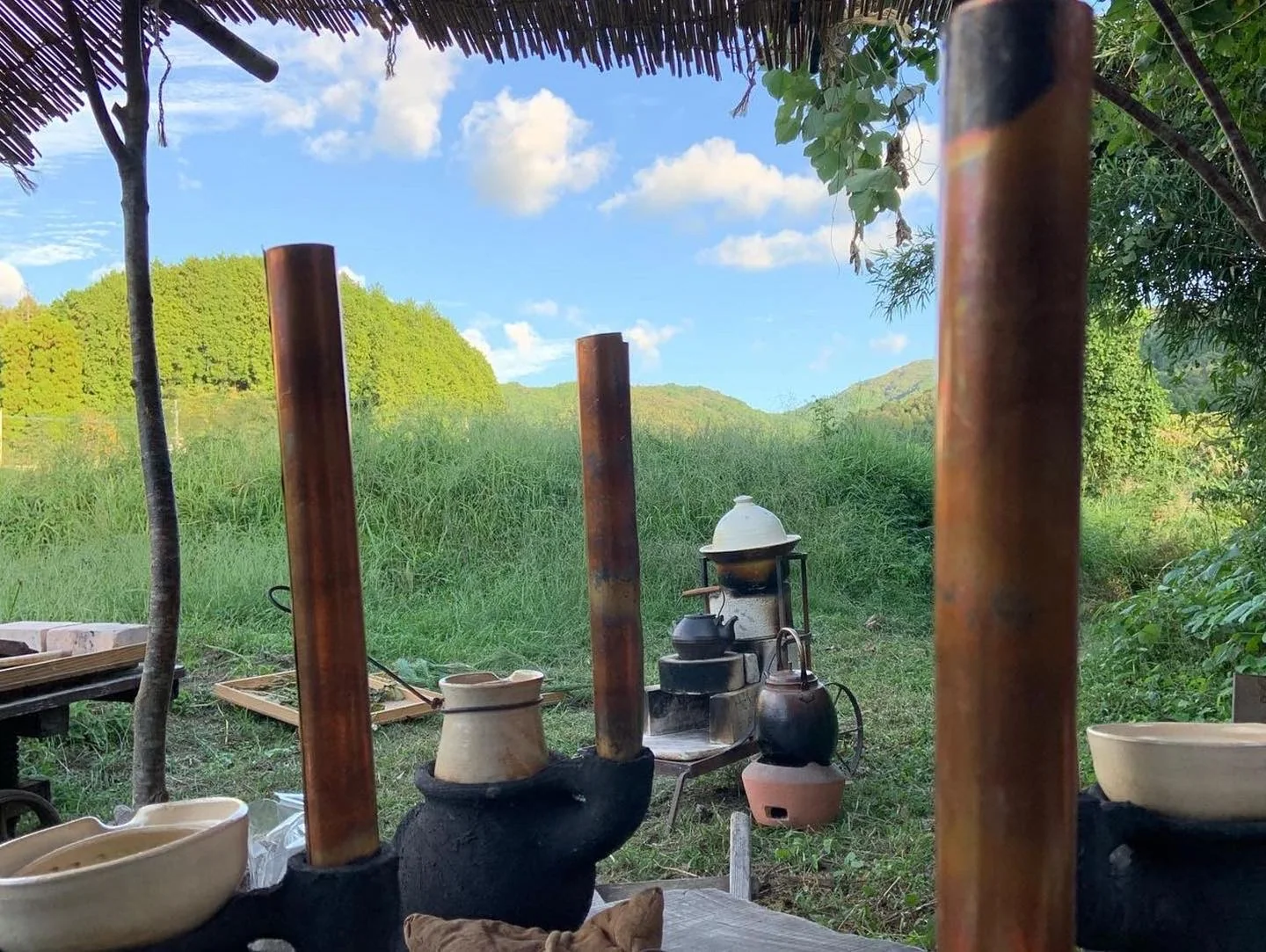
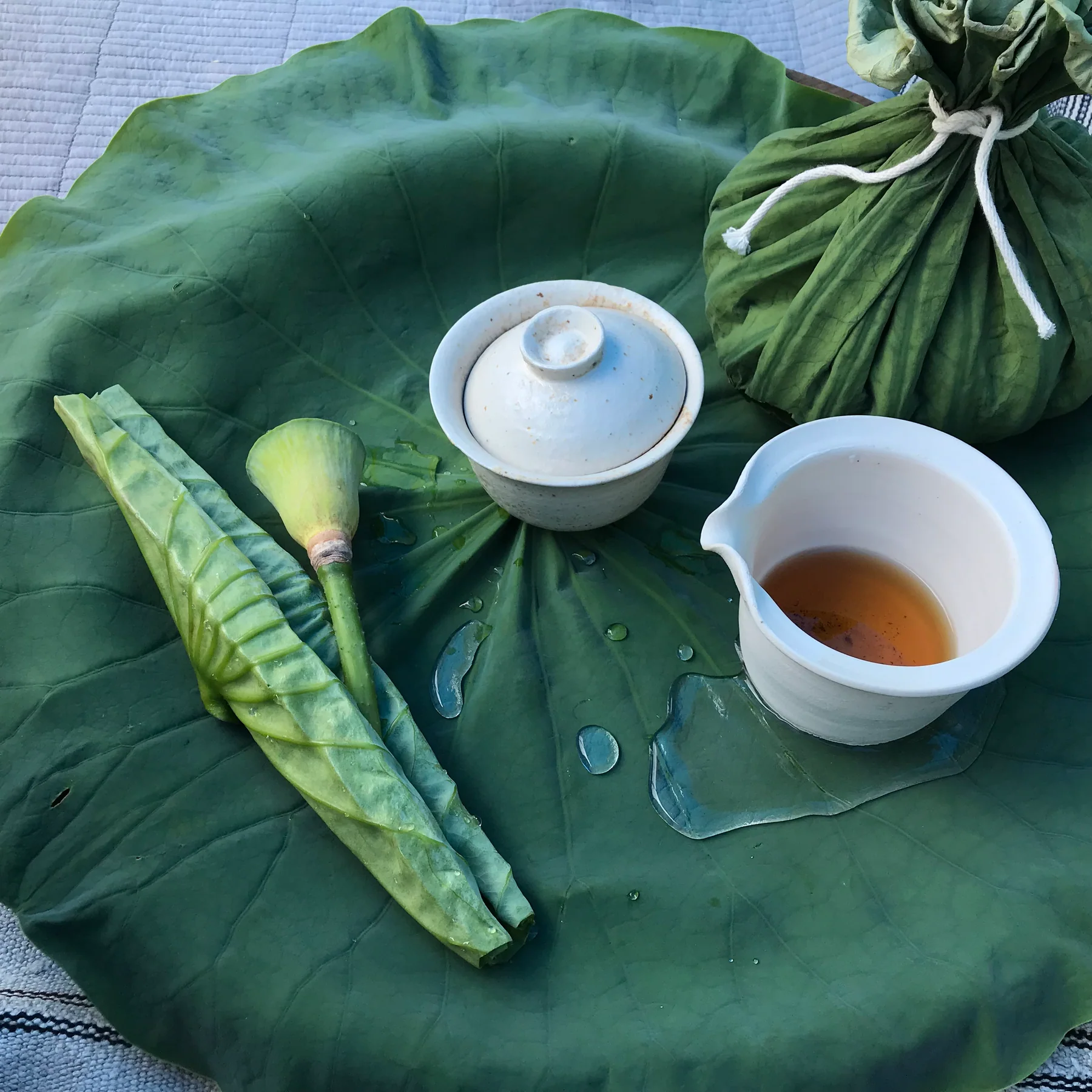
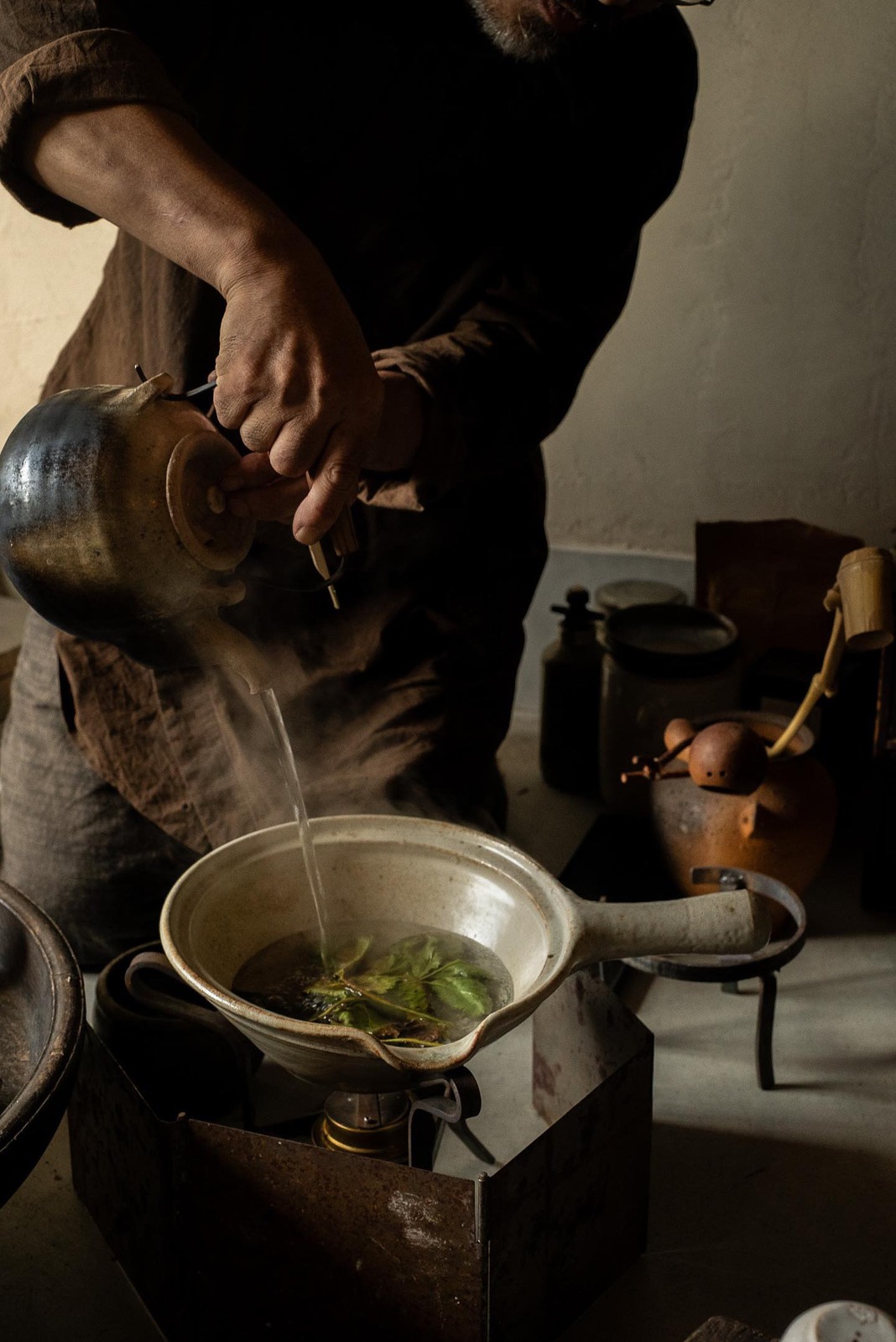
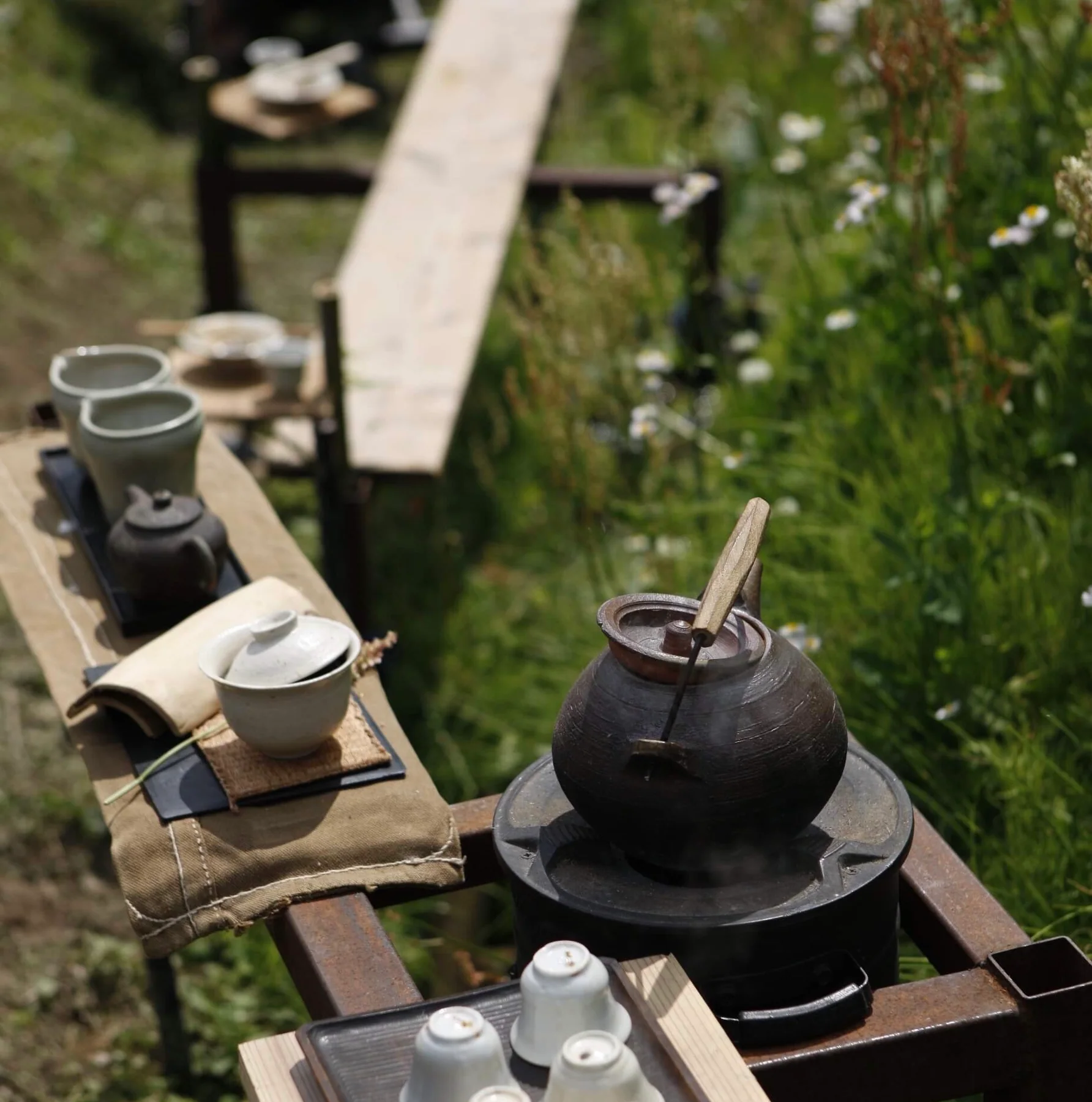
Through an encounter with a Taiwanese tea teacher, I discovered the richness of Taiwanese and Chinese tea culture. Later, meeting ancient tea trees over 1,000 years old—so tall I had to look up to see their crowns—made me truly realize that tea comes from trees. From that experience, I began to see tea as an event shaped by people, plants, water, and fire (the energy of the sun). As I became deeply immersed in tea, I created a mobile tea setup called Chaguruma (Tea Cart), a device that allows me to prepare a tea gathering outdoors or anywhere. Since then, I have been hosting tea-centered activities both in Japan and abroad. While researching the teas of ethnic minorities, non-traditional teas, and various tisanes, I have expanded my practice beyond teaware. I now create tools such as roasters, distillers, tea-brewing vessels, mortars, and hearths. Through these works, I hope to gently awaken and stimulate a sense of joy in engaging with plants.
I.A. - Do you have a favorite type of tea? What draws you to it?
T.I. - There are so many kinds of tea that it’s difficult to choose. What I enjoy changes with the season and how I feel physically.
I do have a fondness for rock tea (yancha). When I drink it, I feel something of the earth and the sun. I’m also drawn to well-aged, old-tree, and wild teas, where I can sense what I think of as the tea’s own energy—its presence.
For me, tea isn’t just about flavor. It’s layered, deep, and endlessly fascinating. I’m drawn to teas that allow me to feel that depth.
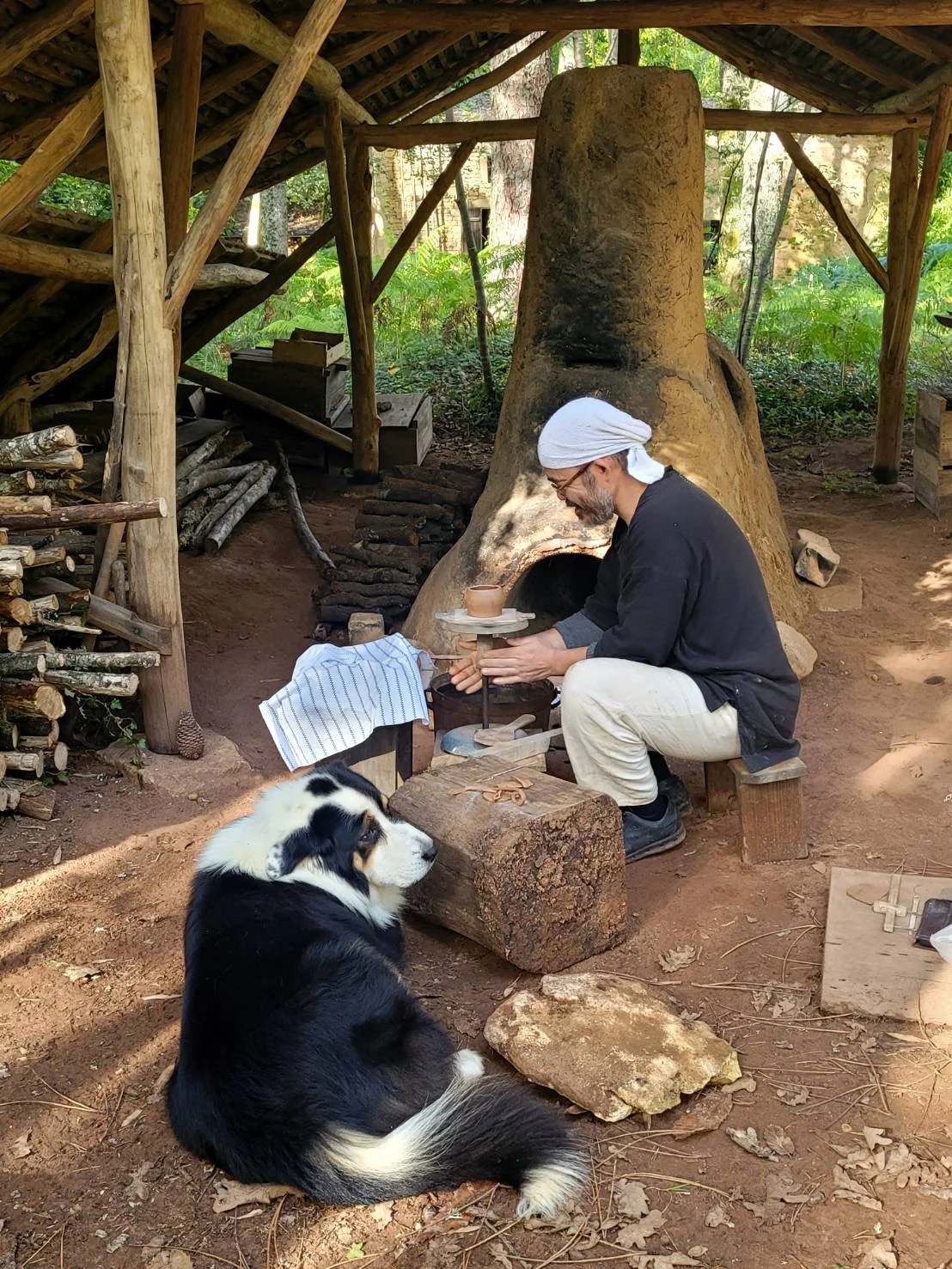
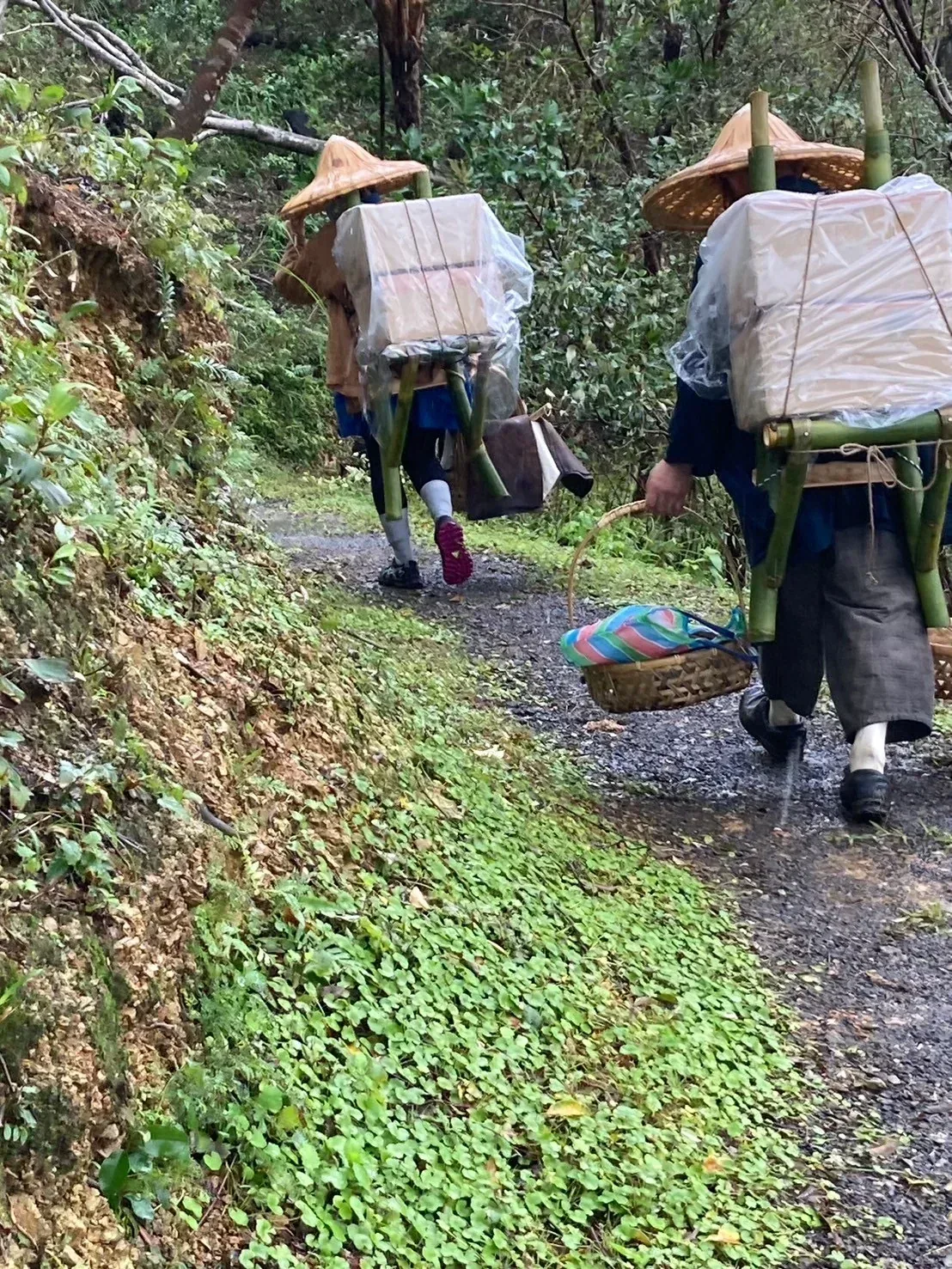
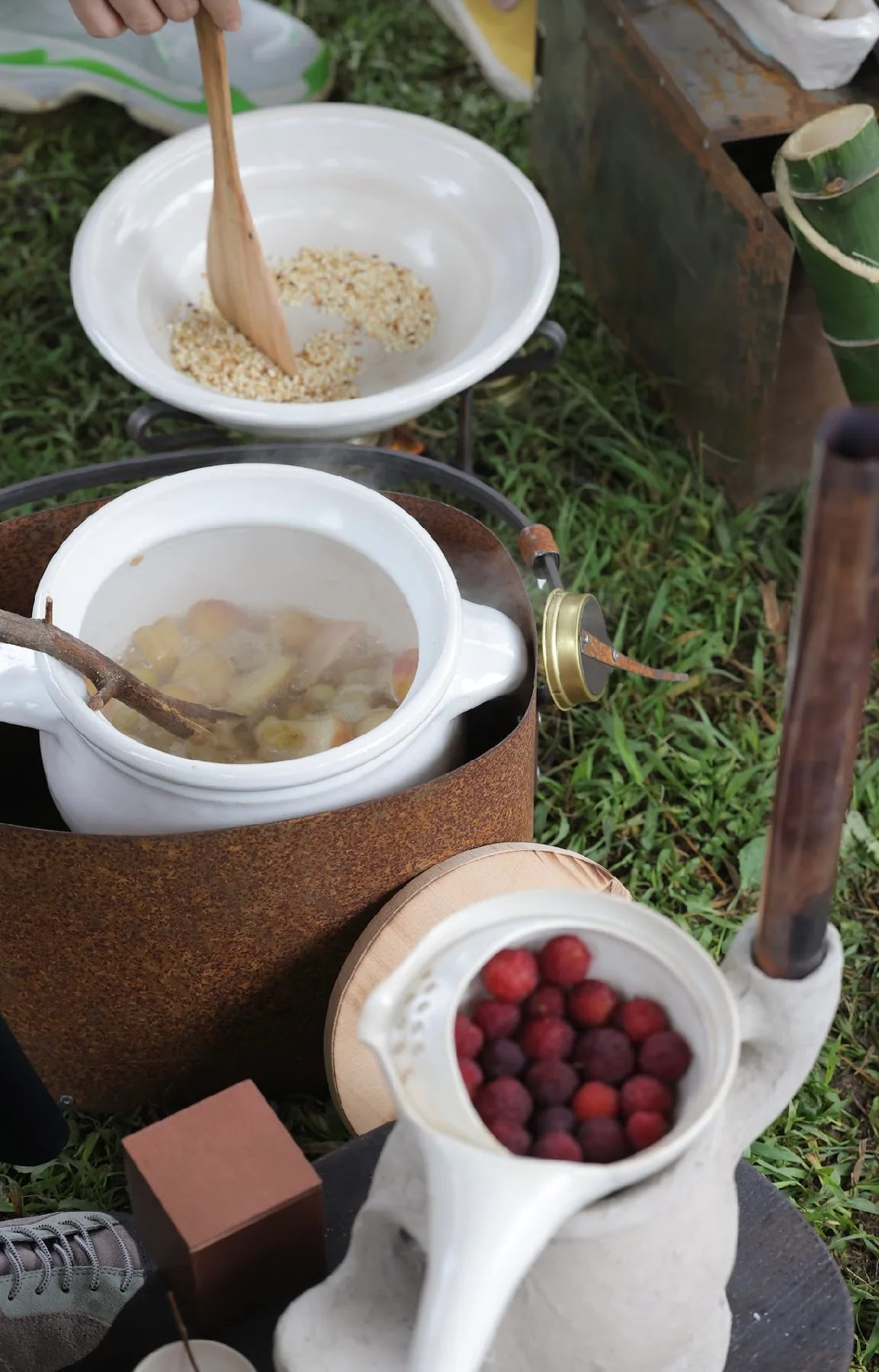
I.A. - Your studio practice feels rooted in daily life and environment—how do your surroundings in Shiga influence your work?
T.I. - There are moments, depending on the season or time of day, that suddenly take my breath away. Being able to experience that kind of beauty helps me relax and reset, which influences my work.
At the same time, my immediate surroundings aren’t especially remarkable. The landscapes I’ve seen and experiences I’ve had elsewhere may shape me more.
What matters is perception. Often we look without really seeing. If I can heighten my sensitivity, the environment becomes more compelling. From that sense of discovery, curiosity emerges—and that leads to creation.
I.A. - How did your relationship with tea shift the way you think about your work?
T.I. - When I study tea from historical, regional, or production perspectives, I realize how limitless it is. The varieties feel almost infinite, and the methods of preparation are incredibly diverse.
Teas made by ethnic minorities, especially those without written records, are often absent from official histories. Yet when I encounter them, they feel vivid—like living events shaped by people, plants, water, and fire.
Discovering this richness made me want to explore and share it. From there, creating the vessels and tools became a natural extension. That process itself has become a kind of play.
I.A. - How do you think about the relationship between the maker and the user?
T.I. - When both share certain intentions, a relationship can emerge that stimulates both sides.
It shouldn’t be one-directional, but simply responding too closely to the user’s requests isn’t very interesting either.
I.A. - How do you see your work in dialogue with tradition?
T.I. - Tradition is connected to how people lived at a particular time. It shouldn’t exist only in the past—it should remain connected to how we live now.
We can be guided by it, and at times gently move it forward. I try not to be overly conscious of it. I need a certain distance—neither too close nor too far.
In my daily practice, I prefer to focus freely on giving form to what captures my attention.
I.A. - When you’re not making, what fills your creative life?
T.I. - I keep a steady rhythm. If I feel stuck, I sit by Lake Biwa and zone out.
I spend time with books—on cooking, small shelters, or whatever draws me in—letting images and words wash over me.
When traveling, I walk a lot without thinking too much. Strangely, that’s often when ideas come.
I.A. - What do you feel Japanese ceramics contribute to global craft conversations?
T.I. - It’s difficult to define. Japanese ceramics move in many directions, and I don’t know them all.
Recently, I participated in an exhibition at JAPAN HOUSE London, where I also held a tea gathering. There was strong curiosity from visitors.
Japan has a long history of ceramics, deeply tied to daily life and food culture. There’s also an openness to diverse expressions—I think that’s what people are responding to.
I.A. - You often present your work outdoors—how does nature influence your practice?
T.I. - Wanting to enjoy and share tea was the starting point. I appreciate the traditional tea ceremony, especially Sen no Rikyū, but tea has never existed only indoors.
Nature allows for a more relaxed experience—it helps you reset. That’s why I began creating tools for outdoor tea.
Still, nature isn’t necessarily the “best” setting. What matters is one’s state of mind. Sometimes it’s enough to sense a landscape with your eyes closed.
I.A. - What part of your personality shows up most in your work?
T.I. - Perhaps a certain looseness—leaving space rather than controlling everything too rigidly.
I aim for something relaxed, quiet, yet deep and generous in spirit. It’s not easy to achieve, or even to recognize in my own work.
I.A. - How do you hope future generations carry forward the spirit of Japanese craft?
T.I. - It’s difficult to define what that “spirit” is. Inheritance can feel heavy. It may be better to approach it lightly, while searching for what feels true. Not forcing things often leads to better results, though there are moments when you must stand firm.
I often return to something I was taught during my apprenticeship –
Have the hands of a craftsperson (refine your skills).
Have the heart of a poet (learn to feel).
Have the mind of a philosopher (learn to think).
In the end, it comes back to that.