ILÉM PAPER
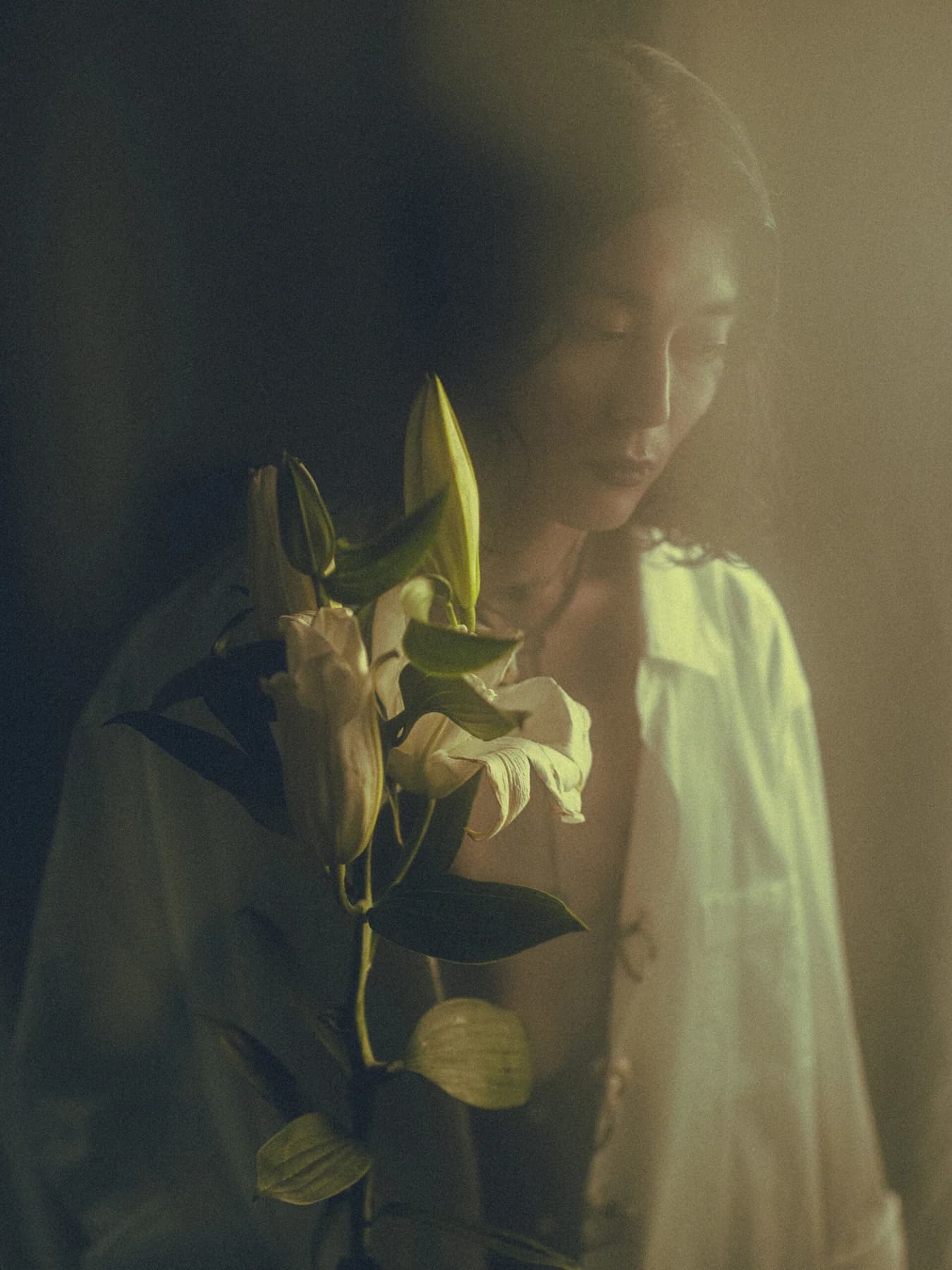
Listening to the Primordial Wind – with Musical Artist Ryuta Takashi
What Remains — A conversation with Industrial Designer Nao Iwamatsu
The Shape of Tea – In Conversation with Takashi Ichikawa

Gender Dynamics and Post Consumer Behavior: Matcha
Where Flowers Become Form – with Floral Artist Genki Tanaka
Listening to the Primordial Wind – with Musical Artist Ryuta Takashi
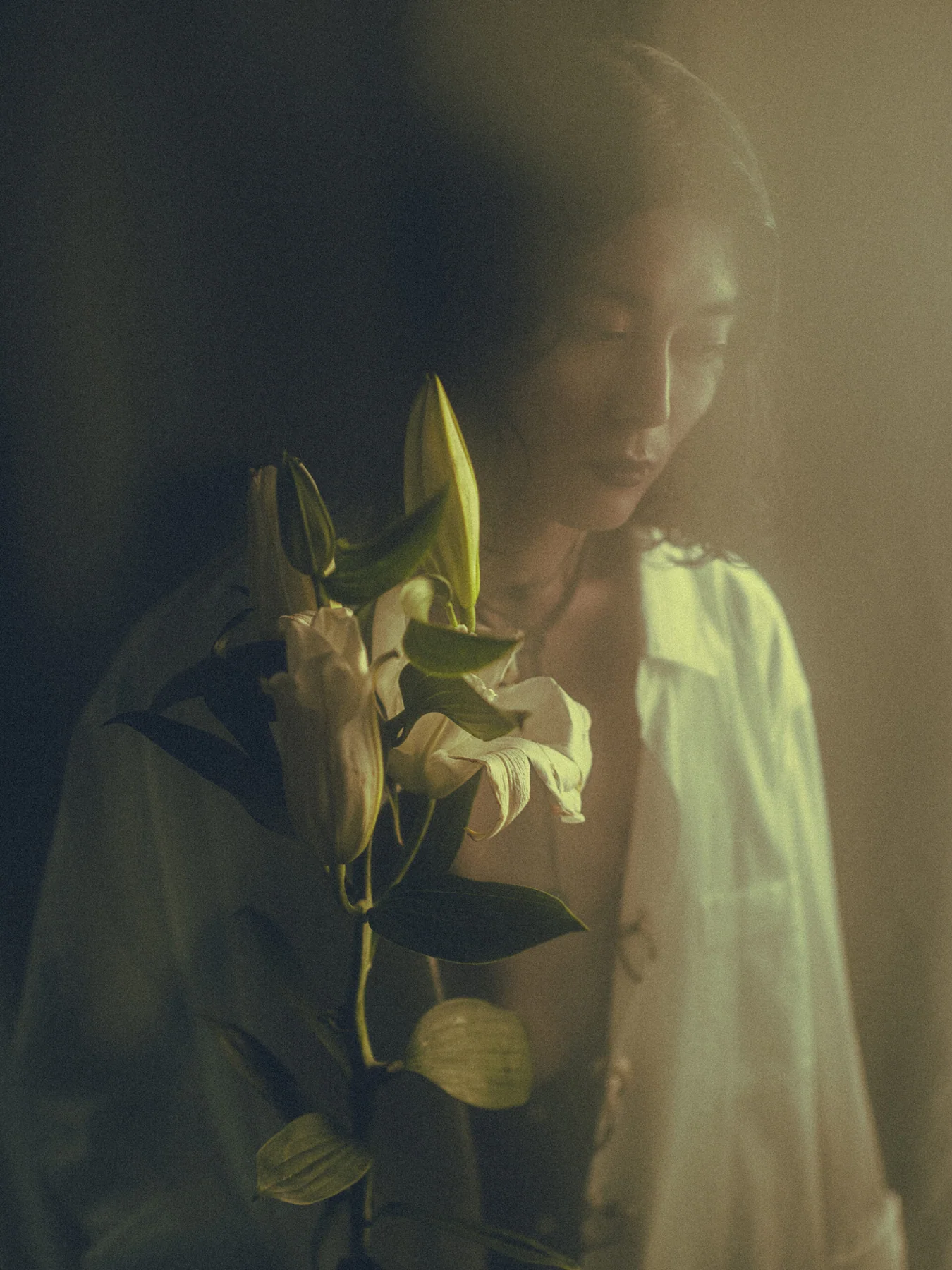
Ryuta is a composer and producer based in Kyoto. His album Jewels moves across Buddhist cosmology, the Silk Road, fractal mathematics. You don't need to know any of that to feel it. But knowing it afterwards changes something.
What struck me most in our conversation was the “smallness” of where it all begins. One note. He told me the first note determines everything.
While you read this, you should listen to him on ILÉM Sound — the playlist we put together for this edition. Start there.
-Imran
I.A. - Ryuta, where does your musical journey begin?
R.T. - Music was something deeply woven into my everyday life. One room in our old house was filled with instruments, and music was always playing.
Tracing my earliest memories, I grew up listening to Japanese artists such as Ryuichi Sakamoto, Akiko Yano, THE BOOM, Taeko Onuki, Yumi Arai, Rei Harakami, Takashi Yoshimatsu, Happy End, Quruli, Ann Sally, UA, and Kenji Ozawa. At the same time, a wide range of international artists filled our home: Joni Mitchell, Prefab Sprout, Bill Evans, Pat Metheny, Vashti Bunyan, Judee Sill, King Crimson, Carole King, U2, The Cardigans, Belle and Sebastian, Sly and the Family Stone, Sade, Enya, The Free Design, and Penguin Cafe Orchestra.
My father was an avid collector of classical records, so there was always something playing. However, three pieces that still resonate deeply with me are Les Barricades Mystérieuses by François Couperin, The Lark Ascending by Ralph Vaughan Williams, and On Hearing the First Cuckoo in Spring by Frederick Delius. The worlds these compositions evoke remain strongly embedded in my own artistic expression.
Listening to music and interacting with instruments felt completely natural to me. If I were to identify the first true spark of creative motivation, it would be when an electronic piano arrived at our house during my elementary school years. It came with demo recordings that included several pieces by Claude Debussy. I began searching for those sounds myself, exploring the harmonies by ear—that was the beginning of my creative impulse.
Later, in junior high school, I started listening to Radiohead after discovering that one of the anime opening themes I watched featured their music. Through them, I became interested in the qualitative beauty of sound itself—the beauty that exists just before it becomes structured, notated music.
Around that time, I began composing using free music production software distributed overseas. Because of the software’s characteristics, it was particularly suited to dance music, and I found great joy in creating house, drum and bass, hip-hop, and R&B—genres I hadn’t previously listened to much. In those early days, it felt like a festival: the crossover between electronic and club music led by Flying Lotus and his Brainfeeder collective, combined with the emergence of new micro-genres across pre-Spotify internet platforms.
I feel fortunate that the timing of my initial creative impulse coincided with such a vibrant and exciting era.
I.A. - What have you been listening to lately?
R.T. - Some time ago, when I was spending long hours at a café in Okazaki, Kyoto, Igor Stravinsky’s The Rite of Spring was playing on an endless loop. It’s rare in everyday life to sit down and listen to a full ballet score from beginning to end, so the experience was quite striking. Ever since, I occasionally find myself listening to it for an entire day.
More recently, I’ve been listening to the album TORIGUNI by the Japanese singer Kurumi on repeat, almost like a lullaby. I’ve also been drawn to Daichi Wago, a Japanese rapper who originally worked in the poetry scene—his sense of language has a striking, direct propulsion combined with a fluid, organic mutability.
At home, I often play Glenn Gould’s Goldberg Variations, along with Brian Eno, Nordic jazz from ECM Records, and artists such as The Vernon Springs, Akira Uchida, Joseph Shabason, and Roberto Musci.
When I go for walks, I tend to listen to Sibylle Baier, Bob Dylan, Haley Heynderickx, Nick Drake, or Cate Le Bon. At night, I’m often quietly getting tipsy to Julie London or Billie Holiday. On better nights, I might wander the streets past midnight listening to Puma Blue or Clams Casino.
With each passing year, the amount of time I can spend listening to music with drums seems to grow shorter—perhaps a desire to determine the rhythm of my own breathing rather than surrendering to an imposed beat.
I.A. - Do you see any tension between tradition and experimentation in your music?
R.T. - The only “tradition” I feel I can truly engage with is its atmosphere—the cultural DNA embedded in a world where the macro and the micro resonate with one another. What I can work with is the ability to sense that presence and allow it to resonate with the listener.
Tradition itself can only ever be touched as representation; like an idea, it cannot be fully grasped in its pure form. Understanding it is inherently difficult, entangled with history, borders, and nationalism.
In that sense, Japan has a particularly unique character. As an island nation, certain continuities have been preserved, yet it has also continuously absorbed and transformed outside cultures. Even what we consider “pure tradition” is already layered with external influences.
Recognizing this, preserving tradition and experimentation are not necessarily opposites. Tradition can be understood as the accumulation of continuous renewal. For me, it is not something to protect or belong to, but an organic concept that responds to my way of being and continues to evolve.
In truth, just as we cannot fully know history, we cannot fully know tradition. My respect lies in contemplating the sky, the sea, and the land that have endured behind it—and the traces of human experience within them.
I.A. - Walk me through your creative process, from the first idea to a finished track.
R.T. - It may sound unusual, but the very first note determines everything. From within a cradle of randomness, I grasp a single sound out of a universe of possibilities. What feels like chance crystallizes into something inevitable, and a one-time-only microcosm unfolds into a piece of music.
There is intention in the process, but even that is triggered by the first note. The first note is unchangeable—like the moment we are born.
Whenever I see a large river, I think of the phrase, “No man ever steps in the same river twice.” I feel constantly immersed in that flow of possibility, and composing music feels much the same.
I.A. - If you could collaborate with someone outside of music, who would it be?
R.T. - I would love to collaborate with people who possess a refined sensitivity—poets, butoh dancers, playwrights, film directors, perfumers, tea masters, spatial designers, or programmers working in creative coding.
More abstractly, I’m drawn to people who can “feel the wind.” Since I tend to be quite grounded and spend much of my time alone in the studio, I would welcome a collaborator who could draw me outward into the world.
I.A. - “Jewels” feels deeply narrative. How did stillness and reflection shape the album?
R.T. - This album is a string of pieces created over a long period of time, threaded together like beads. Each composition emerges somewhat randomly, but they share a common worldview shaped by my experiences.
The underlying thread of the album is the idea of the Silk Road, bringing together Oriental mysticism, Western visions of the Orient, Buddhist cosmology, and mathematical ideas such as fractals. Moments of stillness allow me to organize sensory and intellectual input—a process of bringing order to accumulated chaos. Quiet moments connect existing points within me, like stars forming constellations.
I.A. - What’s something people might be surprised to learn about how the album was made?
R.T. - There was actually one track I forgot to include. I realized it midway through production, but by then it was too late. It may appear in a future release. The track Interflow was originally about nine minutes long, and I hope to share the full version someday. The final track, Celestial Tuning, was initially conceived as a crossover between ambient jazz and lo-house. Funnel and Infinite Reflection began as a simple equipment test—the project file was titled “Test 1.”
I.A. - If you could perform this album anywhere in the world, where would it be?
R.T. - That’s a difficult question. The album spans a wide geographic imagination—cities such as Samarkand, Xi’an, or Dunhuang, as well as quarries or crystal caverns.
If I had to choose one place, the album is conceptually tied to Indra’s Net. In that sense, Louvre Abu Dhabi feels architecturally aligned with this cosmology.
I.A. - How does your cultural background shape your music, even unconsciously?
R.T. - Expression is like a spring that emerges from everything I have lived and felt. My environment and roots shape it entirely. The sounds, scales, and rhythms that feel natural to my body are often Eastern in character, perhaps because they align with the cycles of the place where I live.
If I trace that feeling further, it leads beyond human history. I often think about what I call the “primordial wind.”
When I feel as though I have captured that wind, I experience a deep sense of nostalgia, as if I have touched something beyond time and geography. Sometimes, while composing, I sense its presence within the music.
When that happens, I feel a certainty, almost like a revelation.